Data-Driven Human Resource Management


Artificial intelligence (AI) technologies continue to make an impact in the automotive industry. Technologies developed with a focus on providing comfortable driving to the driver aim to improve safety standards, transform the driving experience, and enhance traffic flow while aligning with sustainability principles. AI-supported automated driving technology holds significant transformative potential as an area of rapid development in recent years. It is expected that AI-supported automated driving technology, along with autonomous driving, will usher in a new era in the automotive sector, leading to increased investments in this field.
Many leading automotive brands are investing in AI-supported automated driving technology. Each brand distinguishes itself by offering technologies with different features, pushing forward competition through enhancements and developments. For example:
Mercedes-Benz offers the “Drive Pilot” automated driving system in its S-Class sedan model.
BMW incorporates the “Driving Assistant Professional” automated driving system in some of its models.
Audi focuses on a range of AI-supported driving features under the name “Audi AI.”
Ford uses the “Ford Co-Pilot360” driving assistance system.
General Motors offers the “Super Cruise” automated driving system.
Nissan provides the “ProPILOT” automated driving system.
Hyundai introduces a series of automated driving systems under the name “SmartSense.”
Toyota offers the “Toyota Safety Sense” driving support package.
Honda presents a range of automated driving features under the name “Honda Sensing.”
Volvo offers the “Pilot Assist” automated driving system and has announced the introduction of “Highway Pilot,” capable of fully autonomous driving, starting in 2022.
AI in cars aims to improve vehicle safety, enhance fuel efficiency, and provide advanced connectivity features. This technology operates by integrating a set of algorithms, sensors, and computer systems to enable self-driving capabilities in vehicles.
AI-supported automated driving technology has the potential to transform the automotive sector significantly, supported by statistics indicating various positive effects on safety, the economy, the environment, and consumer preferences. Automotive manufacturers and technology companies worldwide are increasing their investments in automated driving technology. Global R&D investments in this field have reportedly exceeded $22 billion, showing a 30% increase from 2020. Evolving AI algorithms and sensor technologies focus on making automated driving systems more reliable and precise, with performance and safety being primary concerns. Companies like Tesla have actively implemented the technology, such as Tesla Autopilot, in their vehicles.
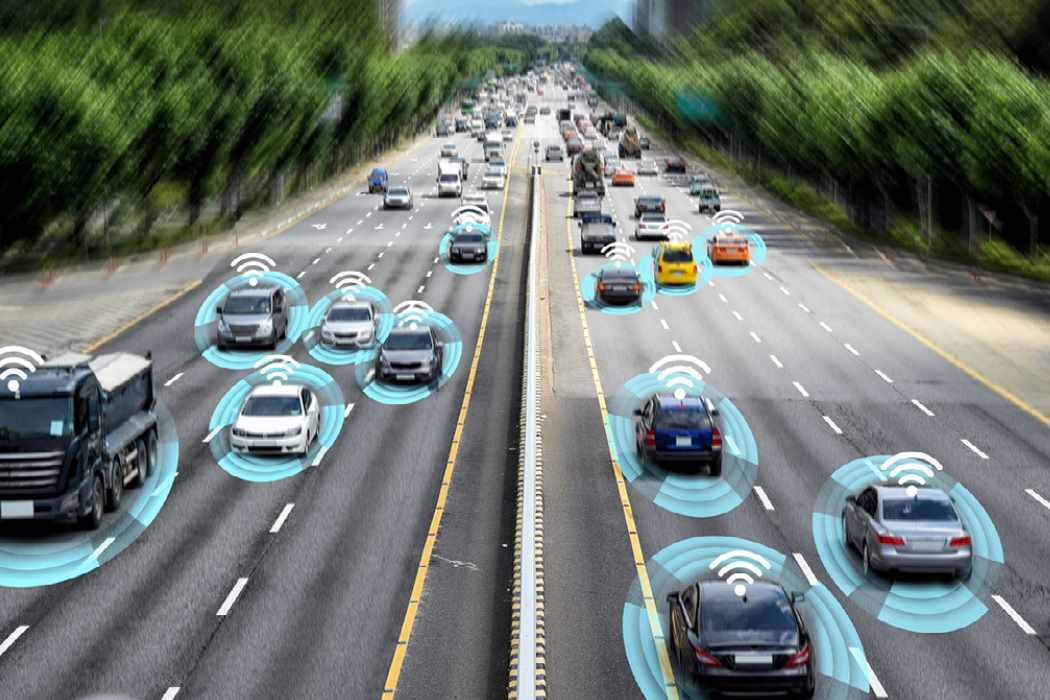
The foundation of automatic driving technology relies on sensors that detect objects and process data. Sensor technology comprises different types, such as lidar, radar, cameras, and ultrasonic sensors, and continuously scans the vehicle’s surroundings to provide a 360-degree view that humans cannot achieve. This creates a perfect environmental awareness by relaying the data collected by the sensors to AI algorithms, allowing the car to recognize objects, interpret traffic signs, and predict scenarios like when to slow down or anticipate the movements of other vehicles. Advanced AI algorithms, including deep learning and artificial neural networks, enable these algorithms to make accurate decisions for more complex or unexpected situations. The SAE (Society of Automotive Engineers) levels for autonomous driving are used to classify the development of automated driving technology. Currently, we are at SAE Level 4, with levels 5 and 6 representing the goal of fully autonomous driving, where extensive machine learning and innovation are required.
Uber, Lyft ve Waymo gibi şirketler de otonom sürüşe büyük yatırımlar yaptı ve bir süredir çalışmalarını hızını artırdı. Bu şirketler otonom araçlarını test etmeye devam ediyor. Uber, bazı bölgelerde otonom sürüş hizmetleri sunmak için Uber Advanced Technologies Group (ATG) adıyla bir birim oluşturarak otonom sürüş teknolojilerine odaklanan ve bu alanda yatırım yapan öncü bir marka. Lyft, Uber gibi bir yolculuk paylaşım platformu olarak, otonom araç teknolojilerini geliştirmek ve ilerletmek için çeşitli işbirlikleri yapıyor. Örneğin, General Motors ile stratejik ortaklığı üzerinden otonom sürüş teknolojileri üzerine yatırım yapıyor. Uber ve Lyft gibi Waymo da; yapay zekâ ve sensör teknolojilerini kullanarak araçların güvenli bir şekilde sürüş yapmasını sağlamak için çalışmalarına devam ediyor.
Companies like Uber, Lyft, and Waymo have made significant investments in autonomous driving and have been accelerating their efforts to test autonomous vehicles. They aim to offer autonomous driving services in some regions. For instance, Uber established the Uber Advanced Technologies Group (ATG) to focus on autonomous driving technologies and investments. Lyft, as a ridesharing platform like Uber, is working on advancing autonomous vehicle technologies through various partnerships, including a strategic partnership with General Motors. Waymo, which uses AI and sensor technologies, continues its work to ensure safe autonomous driving.
In 2018, the Neolix company introduced the world’s first mass-produced Level 4 autonomous vehicle, designed for autonomous delivery and mobility services. During the global COVID-19 pandemic, these autonomous vehicles were used for contactless delivery of medical supplies and meals. As technology advances, the price of these vehicles is expected to decrease, potentially making them more accessible to consumers.
Investments in autonomous vehicles will continue in the coming years. Leading companies like Tesla are increasing their efforts in this field, despite fluctuations in annual revenue. However, experts agree that practical regulations need to be prepared before the potential growth in this field can be realized.
Regulations and laws related to the potential outcomes will need to be established. This includes education for people from various fields about autonomous driving, special or revised traffic rules for autonomous traffic, and special insurance considerations for autonomous vehicles. Many countries may establish universal agreements by preparing special regulations and regulations on the use of autonomous vehicles. This will create new business opportunities. In light of all these factors, it can be said that autonomous driving technologies are not just a key to a new era in the automotive sector but in many other areas as well.