Contents
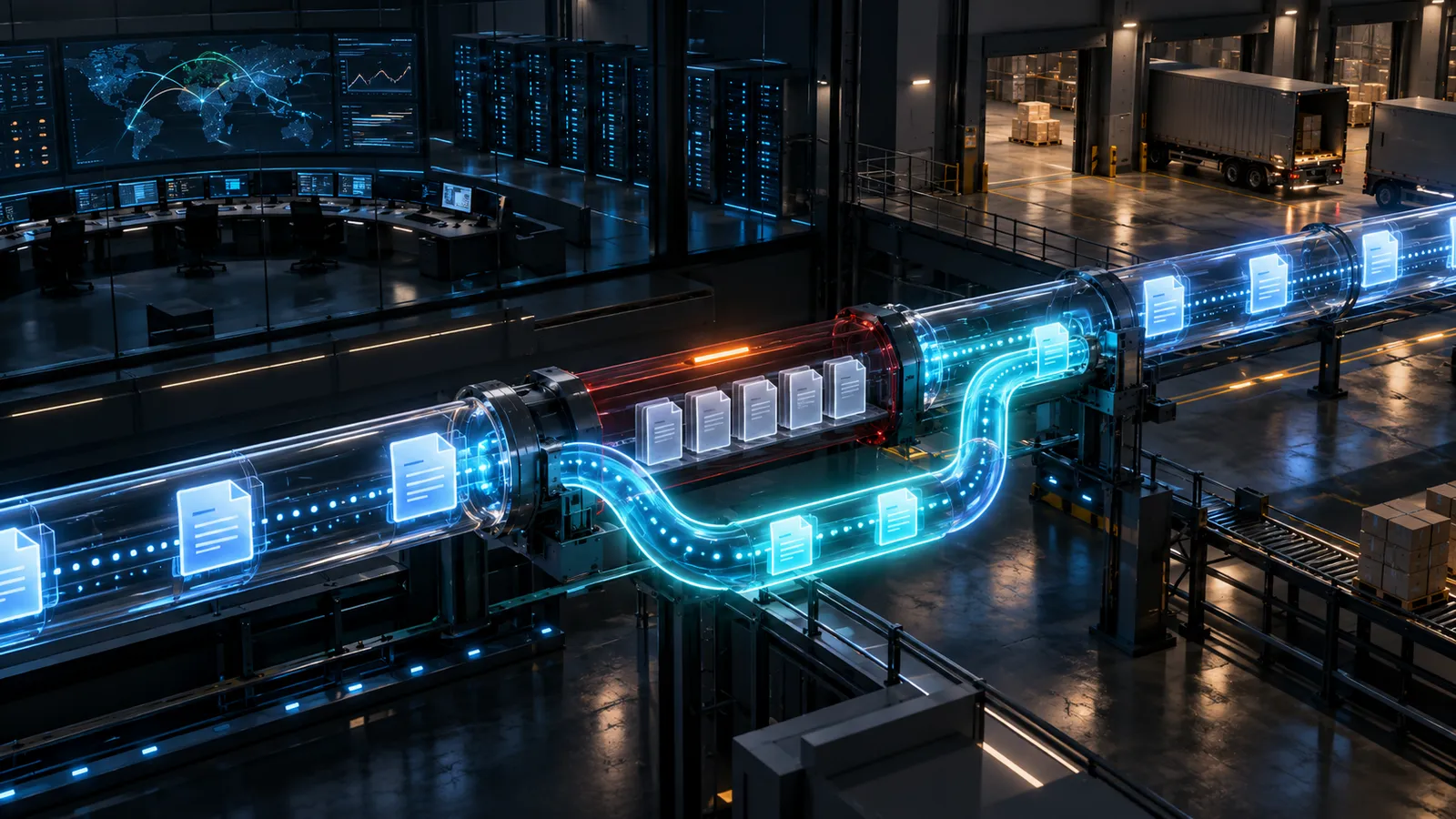
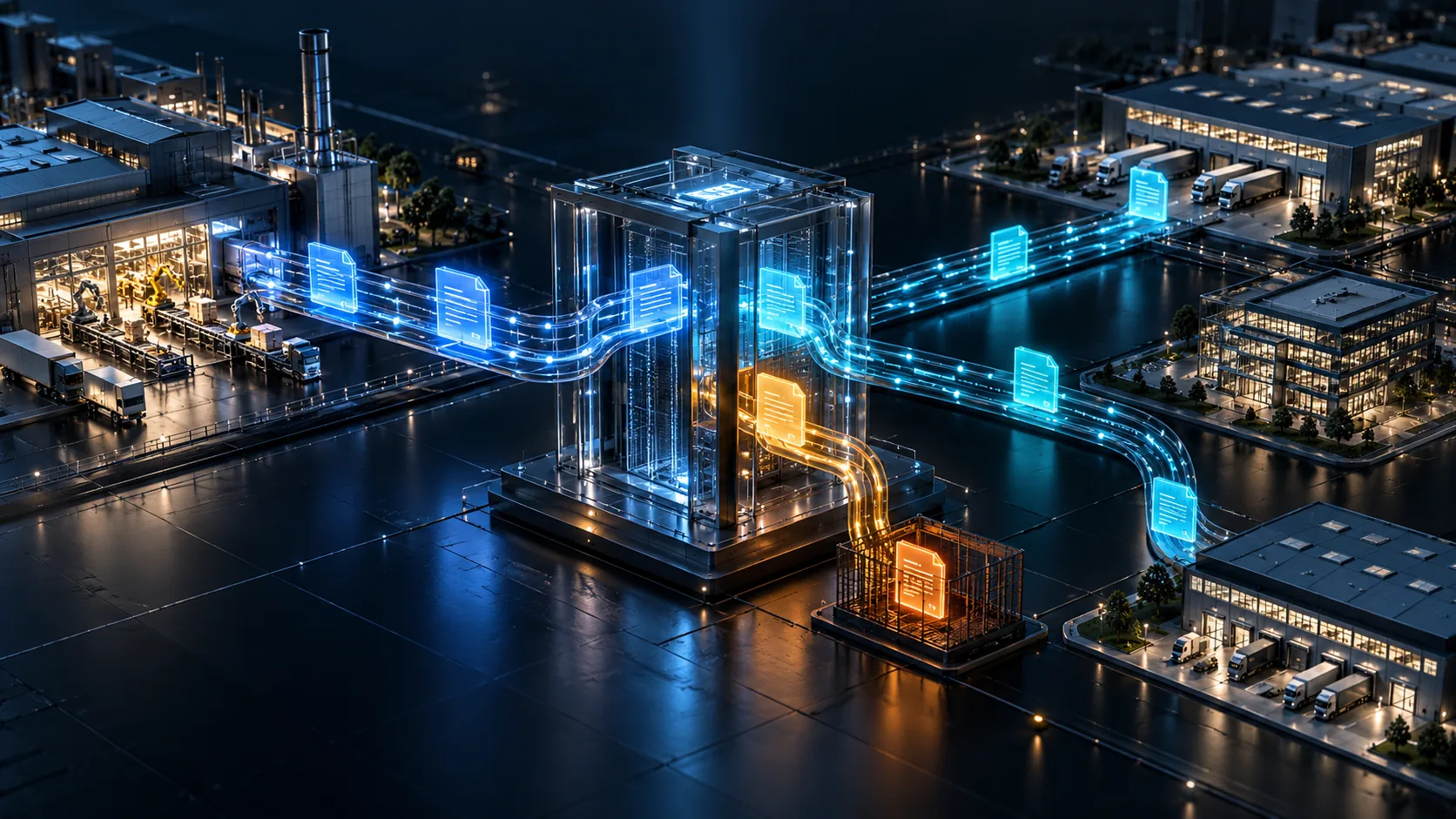
In today's business world, EDI (Electronic Data Interchange) is the backbone of B2B communication in every area, from the supply chain to financial transactions. EDI lets companies exchange documents digitally, quickly, securely and without human error. In today's rapidly changing business environment, however, traditional EDI systems, built on rigid rules and manual intervention, can no longer keep up with what modern businesses need. One of the great advantages of our time is that AI (artificial intelligence) integration can make EDI systems more flexible, predictive and intelligent. In other words, "digital transformation is transforming EDI, too." Here is an overview of the topic.
From Traditional EDI to AI-Driven EDI
For companies, traditional EDI became essential for exchanging standardized data with suppliers, customers and banks. As digitalization gathered pace, data volumes grew and big data kept getting "bigger." Exchanging these large data volumes through traditional EDI systems, however, often required manual intervention or caused efficiency problems. One reason for these efficiency problems is that traditional EDI is more passive than today's systems: it only transfers data and offers no analysis or forecasting. Another reason is cost. One of the most common criticisms was that, although EDI offers many advantages that pay back the investment in the short term, the upfront cost could be seen as a burden. Occasional manual errors, long integration projects and the load on IT also drew criticism. With AI integration, these points of criticism have now been addressed, and EDI has changed. In other words, EDI has moved up from an "operational necessity" to a "competitive advantage."
EDI That Generates Business Intelligence Through AI Integration
With AI support, EDI has become a system that provides proactive decision support. AI can analyze EDI data and make real-time recommendations. AI-integrated EDI therefore delivers more efficient, secure and accurate data exchange and makes operational decisions easier. For example, it can work out how many days it will take for a particular product in a company's inventory to run out and order it from a specific location. When choosing which of the possible suppliers to work with, it can select a supplier "based on specific criteria." Drawing on AI-generated supplier performance reports, it can pick the partners that can deliver the product soonest or ship the fastest. EDI therefore no longer means data exchange alone. It is now a business tool that generates business intelligence and creates value. A company can only gain a competitive advantage and perform strongly if it generates business intelligence and creates value, and the ability to make such a clear difference is a powerful driver of success. A company that cuts its error rate by 70% with AI-powered EDI while its competitors still use manual EDI will stand out in the market, and its investment will pay off in many ways.
Key Advantages of AI-Integrated EDI
Companies that invest in AI-EDI integration also gain operational excellence. Beyond that, the integration offers many advantages both to the companies themselves and to the third parties they work with:
Intelligent Data Validation, Error Detection and Anomaly Detection: Unlike traditional EDI systems, AI does not stop at detecting format errors or missing data. It uses machine learning (ML) models to analyze historical data and instantly spots non-standard or abnormal patterns. For example, if an order document contains an unusual quantity (say, 500% above the industry average), AI can flag it as "suspicious" and trigger an alert. Because intelligent data validation can send real-time alerts to operations teams, it helps businesses minimize both human error and the risk of fraud.
Free-Text Analysis with Natural Language Processing (NLP): EDI usually works with structured data, but AI can recognize and even interpret data coming from different systems and convert it into EDI format. NLP-based AI solutions can automatically analyze critical or confidential information in free text, such as emails or PDF documents exchanged between business partners, and convert it into EDI format. Suppose a supplier sends an email about the "urgent delivery of 10,000 units." AI can process it and turn it into an EDI purchase order, order and invoice details can be filled in automatically, and operations move faster.
Predictive Inventory and Demand Management with Predictive Analytics: AI can run predictive analyses on historical order data received via EDI. A retail company, for example, can use AI to anticipate seasonal swings in demand and generate purchase orders to suppliers automatically. For businesses, this means avoiding both stockouts and excess inventory. The result is an optimized supply chain that can be managed proactively.
Autonomous EDI Integration and Self-Healing Systems: Setting up EDI integration with a new business partner usually requires lengthy technical configuration. AI-powered systems can monitor data flows, recognize APIs and data formats automatically and complete the integration within hours. If communication breaks down or a format changes, the system can also repair itself, a capability known as "self-healing." Technical settings are adjusted automatically. For example, when a supplier switches from XML to JSON, AI detects the change and handles the conversion automatically.
Secure and Transparent Transactions with Blockchain: Combining AI and blockchain takes the security and traceability of EDI transactions to the highest level. AI can continuously monitor EDI data on the blockchain and detect unauthorized access, which strengthens security. Smart contracts can also fully automate payment approval. For instance, once the EDI document for a shipment of goods is recorded on the blockchain, AI can automatically trigger payment of the invoice. Because blockchain records cannot be changed, documents are added to the chain transparently, one after another, and are made available securely.
Stronger Integration Capabilities: AI can make data integration between different platforms and systems easier. For example, it can create a seamless connection between an ERP system and a CRM platform, so that different systems work together as one coherent whole.
Continuous Improvement with Machine Learning: AI-based EDI systems keep learning and improving. By learning from user behavior, actions and transaction histories, they become smarter over time, which leads to better-informed decisions. This greatly reduces the need for human intervention and ensures that processes are continuously improved.
Going Beyond Boundaries with the EDI of the Future
To get more out of EDI, it is important to share the technology roadmap with suppliers, customers and other third parties and to keep data clean and structured so that AI models work accurately. This preparation also lays the groundwork for cost savings. According to Forrester research, AI integration reduces EDI costs by 35-50%. This figure alone shows how valuable an investment AI-based EDI is in terms of cost savings.
Customers expect ever more supply chain transparency and speed, and delivering a better customer experience is becoming increasingly important. AI-EDI integration is the key to meeting these needs. Thanks to all these advantages, AI-based EDI systems are no longer "just data interchange"; they are becoming a specialized source of business intelligence and a strategic business tool.
Over the next 5 years, applications such as real-time language translation, more advanced AI, global supply chain applications and customer satisfaction forecasting based on sentiment analysis will become widespread, along with the advantages they bring. The market is expected to grow by 30% in 2025. Intelligent EDI systems are therefore a major forward-looking technology that opens the door to a business world that is not only "digital" but also "predictable" and "without boundaries." AI is turning EDI from "a system that transfers data" into "a business brain that turns data into strategy."
B2B/EDI Integration
MAP's B2B/EDI integration connects ERP systems and business partners, with support for protocols such as AS2 and OFTP2 and standards such as EDIFACT and VDA.
Explore the solutionRequest a demo →