Contents
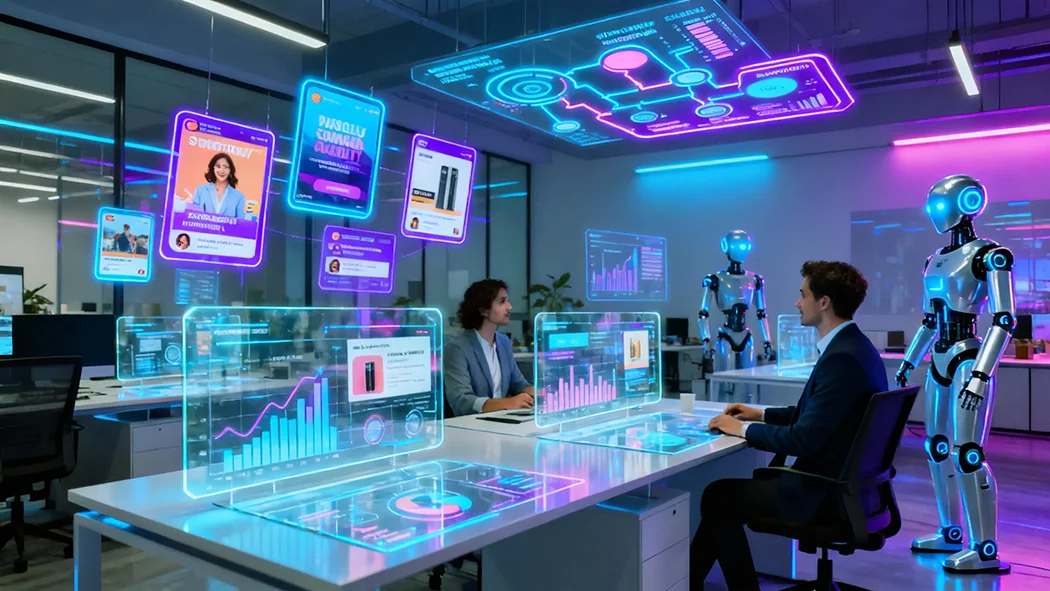
As technology has made it easier to reach customers, businesses have focused more closely on customer experience. This has pushed them to look for ways to take customer experience to the next level, and today it means that the experience has to be personalized. Customer expectations are therefore no longer limited to receiving a high-quality product or service. Instead of generic responses designed for a broadly defined "target audience," customers now expect fast, personalized, seamless and satisfying solutions. Artificial intelligence, one of the defining technologies of our time and one that is accelerating progress in every field, provides a powerful foundation for personalizing the customer experience and delivering products and services in a truly individual way.
How Artificial Intelligence Shapes and Improves Customer Experience
Artificial intelligence brings together technologies such as automation, data analytics, natural language processing (NLP) and machine learning, and gives businesses a powerful foundation for understanding customer needs. This creates unprecedented opportunities for business-specific analysis and for offering more tailored, personalized solutions. With AI, an e-commerce platform can encourage customers to share their opinions and experiences of products or services they bought earlier or tried at one of the same company's physical locations, or it can prompt them to buy again with targeted recommendations. AI solutions also help prevent crises that would hurt the customer experience. A banking app, for example, can detect a fraud risk instantly and issue a warning, protecting the business from an incident that would damage the customer experience. Using AI to deliver a deeper, more personalized customer experience is critical for service that is fast, uninterrupted and accurately meets customer needs. It also gives businesses important advantages such as cost optimization and higher operational efficiency.
AI Tools That Improve Customer Experience
With innovative solutions for improving customer experience, artificial intelligence has become an indispensable part of business. Used effectively in customer service as well as in marketing and communication, this technology allows businesses to give their customers a faster, more effective and more personal experience. Several AI tools make this possible. Chatbots and virtual assistants, for example, respond instantly to customer needs and provide 24/7 availability. Customers can resolve their issues quickly, which increases their trust in the brand. AI-based recommendation systems analyze data on customer behavior and preferences to make fully personalized product and service recommendations. This creates a more relevant and satisfying experience that strengthens the customer's bond with the brand.
Another important contribution of AI is that it helps businesses understand their target audiences better by analyzing customer behavior. Such analyses do more than meet customers' current needs: by anticipating future expectations, they allow businesses to take a more proactive approach. Automated support systems resolve frequently recurring issues quickly, freeing customer service teams to focus on more strategic and complex problems. Beyond improving the customer experience, AI also makes business operations more efficient. AI-powered data analytics, for example, can help businesses make better decisions in many areas, from inventory management to sales strategy. In customer experience, AI increases satisfaction by offering customers more meaningful and personal experiences, while strengthening businesses' competitiveness and helping them stand out in the market. One concern that may come to mind is the value of human interaction. However, when AI is used strategically and correctly alongside human interaction, it undoubtedly makes both the relationship between customer and brand or organization and the customer experience much stronger.
Examples of AI-Powered Personalized Customer Experience
Personalization improves the customer experience across all the products and services we consume or use in everyday life. Take Amazon, one of the best-known international examples: the e-commerce giant tracks what the customer bought, how delivery went and how satisfied the customer was, and uses this to encourage the next purchase. Algorithmic analysis and intelligent recommendation systems turn purchase history, search queries, wish lists, reviews and feedback into signposts for future purchases. If, for example, a product bought during a promotion is later offered at a lower price, the customer can be informed in a personal message that the price difference will be refunded.
Platforms such as Netflix, BluTV, Mubi and Spotify analyze users' click and activity history to deliver a personalized experience and get the most out of the customer experience. On Mubi, for example, a viewer who has watched an Agnès Varda documentary receives French New Wave films as recommendations, while another user is offered Iranian cinema. Both are examples of a personalized customer experience. As the customer experience deepens, the brand or provider makes it easier for customers to choose and decide.
The automotive industry is another sector that has adopted AI for personalized customer experience. Tesla, for example, uses AI-equipped sensors to detect potential problems with a vehicle in advance and alert the customer, a good example of proactive crisis management in customer experience. Being able to take action on the road when a battery problem is detected in your electric vehicle makes for a better customer experience. Uber analyzes driver and passenger behavior to optimize trip times, fares and the best routes, and directs drivers and offers alternatives during peak hours. Examples from many areas of everyday life, such as travel assistants, skincare recommendations and smart home integrations, show that AI not only improves the customer experience but also helps brands develop innovative solutions.
Strategies for Transforming Customer Experience with AI
Today, even small businesses can use AI to improve their customer experience. Instead of treating customers as one undifferentiated audience and falling back on generic, ineffective measures, businesses can look at each customer individually and offer solutions to match. They can integrate AI into the customer experience by applying a few strategies for delivering personalized experiences. Insights from big data are essential for understanding your customers. Analyses drawn from large data sets make it possible to understand customer behavior accurately and predict likely purchasing trends. This is a major advantage for personalization. AI-powered tools such as chatbots can raise customer satisfaction by providing round-the-clock support, while also making it easier to collect the data you need and guiding improvements to the customer experience. It is therefore important to use chatbots, apps and every other interaction channel the business offers as a way to collect data. With user-friendly design, e-commerce platforms and apps in particular can help customers find the information they need and guide them toward a purchase decision with useful tips or usage suggestions. Because AI-driven personalization and proactive recommendations encourage deeper engagement with customers, creating unified, AI-driven communication across all channels is an important strategy. In omnichannel marketing, this strategy makes it possible to manage the end-to-end customer journey, following and supporting each customer across channels with a personalized experience. AI-based analytics is valuable for making customer interactions targeted and effective rather than random, and it gives customers the feeling that they matter. Integrating customer feedback into AI solutions is essential for creating that feeling.
Taking a strategic approach to integrating AI technologies into the customer experience is key to gaining a competitive advantage and increasing customer satisfaction. This calls for a strategic roadmap with clear steps. The first step is to understand your customers through data-driven analysis and take a close look at business needs, which helps determine where AI can add value in the organization. One sensible approach, for example, is to identify repetitive, time-consuming tasks, automate them and redeploy staff to customer support where their time is used more effectively. To do this, you first need to understand the customer and assess the current situation objectively. The second priority is to set goals using the power of data analytics. It is important to define clearly what the business or brand wants to achieve with AI. Specific goals should be set, such as improving customer service response times, automating manual tasks or understanding customer behavior better. At the same time, even though the investment may pay off quickly, the business needs to plan its budget and resources. AI applications can involve costs for software tools, professional services and employee training. Budgeting and resource planning are therefore needed to meet the financial and operational requirements of AI integration. Where necessary, courses or dedicated training should be set up to help employees adapt. In this training and budget planning, data security is the most critical consideration. AI applications process large volumes of data, so security protocols must be followed to reduce the risk of data leaks and protect the confidentiality of customer information. Data security and privacy protocols, as well as precautions against potential crises, must not be neglected, and strict measures are needed to avoid any loss of trust or reputation over the security and confidentiality of customer data. Reviewing every strategic step and continuously monitoring the analyses points the way to the next improvements in customer experience. Keeping the process going makes it more effective and helps improve the customer experience continuously.
B2B/EDI Integration
MAP's B2B/EDI integration connects ERP systems and business partners, with support for protocols such as AS2 and OFTP2 and standards such as EDIFACT and VDA.
Explore the solutionRequest a demo →