Contents
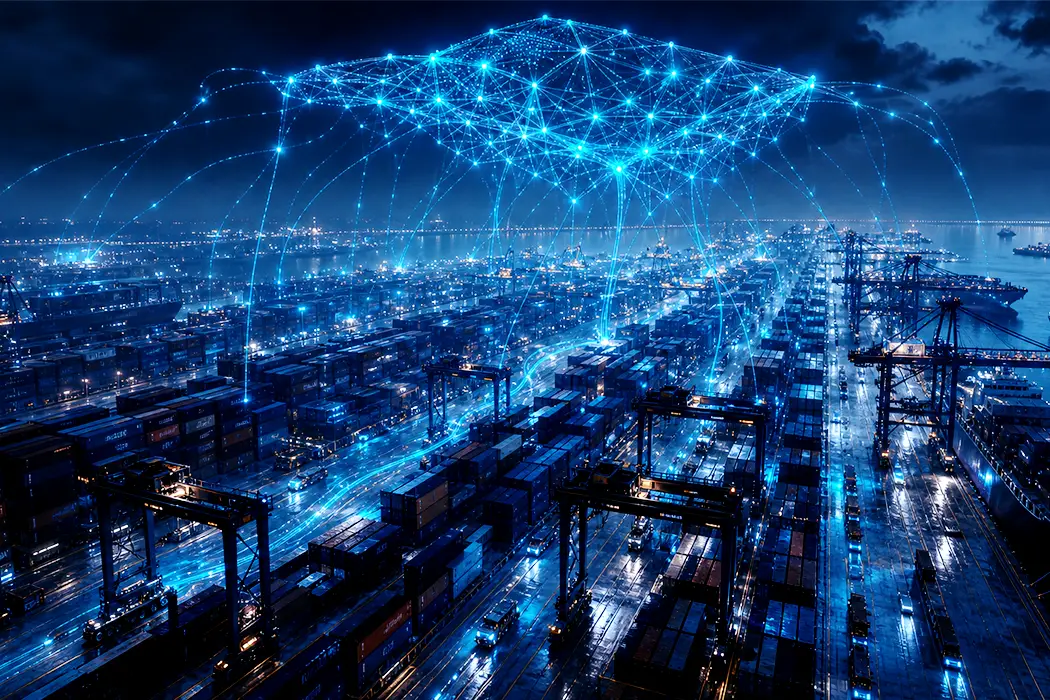
At the end of the last decade of development, the supply chain has become completely different with digital transformation. By 2023, at least 50 per cent of large global companies will be using artificial intelligence. As the supply chain continues to change and renew as a direct result of the impact of technology, real-time has become critically important in the supply chain. In this context, we have summarized the role of digital twin technology in the supply chain for you.
What is Digital Twin?
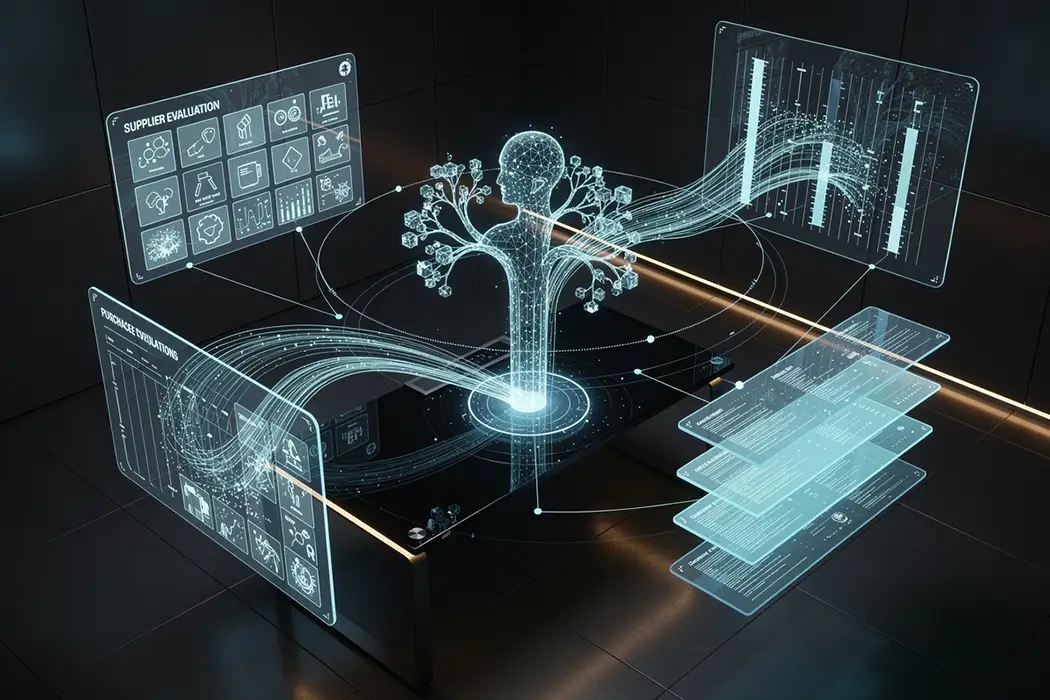
The 4.0 industry offers a technological infrastructure that focuses on digitization and analytical capabilities to identify events in real time. Digital twins are virtual environment models that enable to test the current system and proposed scenarios through this infrastructure, which allows a kind of validation before certain designs are finally finalized on the system. In other words, it can be described as a one-to-one virtual reflection or replica of the real system or service. This technological application, which has made a name for itself in recent years, was among the top 10 strategic technologies in 2017 and will be mentioned more frequently in the future.
Function of Digital Twin Technology in Supply Chain
Businesses that experienced the consequences of the global Covid pandemic, which had a domino effect on the global economy, realized how unprepared they were for crises and the importance of crisis plans. Thus, it will now try to continue on its way in a more experienced way against such crises that may occur in the future. Businesses want to be ready to respond with continuous and rapid response strategies as demand patterns or the nature of supply change, and as supply issues or various crises arise. Of course, flexibility and reflexes regarding inherent risks and potential crises in supply chains will be achieved with the help of technology. At this point, digital twin technology can be used to solve ongoing crises and needs in the supply chain.
Using this technology, which has an important place among the technologies of the future, businesses can find the opportunity to improve planning and management across the end-to-end supply chain by identifying supply chain problems in advance. Today, the supply chain system is defined as "a complex network of entities that need an end-to-end representation that can be used to respond to market pressures, external factors and internal considerations", and this model comes up with the concept of digital twin. Developed with high-level technical equipment such as artificial intelligence, machine learning and optimization, the digital twin can be used to optimize various operational processes in the supply chain through simulations. The digital twin can be used, for example, for factories, contract manufacturers, distribution facilities, transport routes and customer locations. Using the digital twin, businesses can evaluate complex interdependent operational processes in capacity, service, inventory and total import cost.
Contributions of Digital Twin Technology to Supply Chain
In today's world where real-time is critical, digital twin technology serves this need. Digital twins help to simulate all entities and interconnections in a complex and multifaceted supply chain and thus overcome challenges. A digital twin used in an operational process means that the entire production process can be fully visualized. In this way, instant intervention becomes possible. Using real-time data, every action in the supply chain becomes visible, making sure that it matches the day-to-day needs. On the other hand, the digital twin offers the chance to pre-test many actions, such as the fit, production or assembly of parts, by conducting experiments and simulations in the virtual world. This saves time and enables reactive stepping in operations. Thanks to digital twin technology, the need for additional capacity can be determined by predicting where bottlenecks may occur with bottleneck predictions, reducing the idle time of assets and improving inventory positions. Another benefit offered by this technology is the identification of risks and opportunities in sales and operations planning by simulating the conversion of a specific plan into action. Thus, with insights and assessments, the process can be improved and optimized, and incorrect strategic expansions and system constraints in plans can be avoided. The insights also allow inventory increases to be aligned with market demand.
Digital twins, which offer the opportunity to optimize the setup of the overall supply chain system, can be used in major global industries such as aerospace and automotive, and are becoming widespread in other industries as well. With the development of technology, it is predicted that it will be widely used by most businesses in the near future. Therefore, both digital twin technology and other applications based on the 4.0 industry infrastructure will continue to change the face of the global supply chain. In this sense, businesses need to rapidly adapt to this transformation and take a visionary approach for sustainable change. In this sense, in order to develop new insights and use them effectively, they need to review all their business processes and innovate their operations for the implementation of new digital platforms or applications.
Sourcess:
*https://www.coupa.com/products/supply-chain-designthe-digital-supply-chain-twin-an-emerging trend-to-reveal-interconnected-insights Date of access: 19. 06. 2022 *
B2B/EDI Integration
MAP's B2B/EDI integration connects ERP systems and business partners, with support for protocols such as AS2 and OFTP2 and standards such as EDIFACT and VDA.
Explore the solutionRequest a demo →