Contents
According to Gartner, by the end of 2026, 40 percent of enterprise applications will include task-based artificial intelligence agents. In 2025, this proportion was below 5 percent. Agentic AI is becoming a layer in the supply chain that no longer merely offers suggestions, but executes transactions from start to finish.
In this article, we discuss how agentic AI works in the supply chain, concrete ROI data, risks, and the KVKK framework in Turkey.
What Is Agentic AI and How Does It Differ from Traditional Automation?
Agentic AI is an artificial intelligence system that, when given a goal, plans and executes the necessary steps to achieve that goal on its own. The user does not navigate through menus; the system takes action directly.
An AI agent consists of three components: perception, cognition, and action. The perception layer collects data from the environment, the cognition layer evaluates this data, and the action layer implements the decision in a digital or physical environment.
Traditional automation operates on predefined rules. Agentic AI, however, adapts its decisions based on real-time signals. For instance, when a delay is detected, the agent evaluates alternative routes, contacts a new carrier via API, notifies the customer, and records the transaction in TMS and ERP systems. All of this takes place without human intervention.
Market size also confirms this shift. The agentic AI market is expected to surpass 52 billion dollars by 2030 from its current level of 7.8 billion dollars. This growth demonstrates that operational processes, including the supply chain, are rapidly shifting toward agent-based systems.
Use Cases in the Supply Chain
McKinsey's field examples show that agentic AI generates concrete value across various points of operations.
An aircraft manufacturer uses agents that automate order execution and inventory levels based on production planning data. This implementation reduced active inventory by 30 percent and increased EBITDA by approximately 700 million dollars.
A last-mile logistics operator with a fleet of 10 thousand vehicles achieved savings of 30-35 million dollars with an investment of 2 million dollars thanks to virtual dispatch agents. A pharmaceutical company reduced lost value by 4 percent with agents auditing invoice-contract compliance.
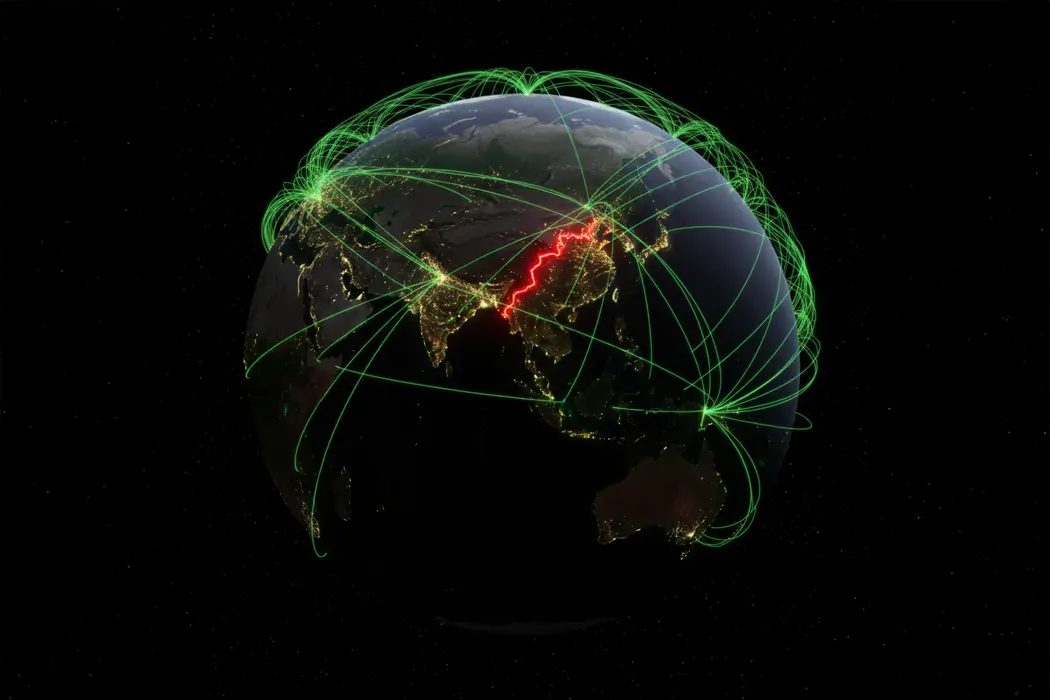
On a broader scale, an agent can act as an autonomous orchestration layer between sourcing, warehousing, and distribution operations. By connecting to internal systems and external data sources such as weather and supplier flow, it continuously forecasts demand, identifies delay risks, and dynamically reorganizes transportation and inventory plans.
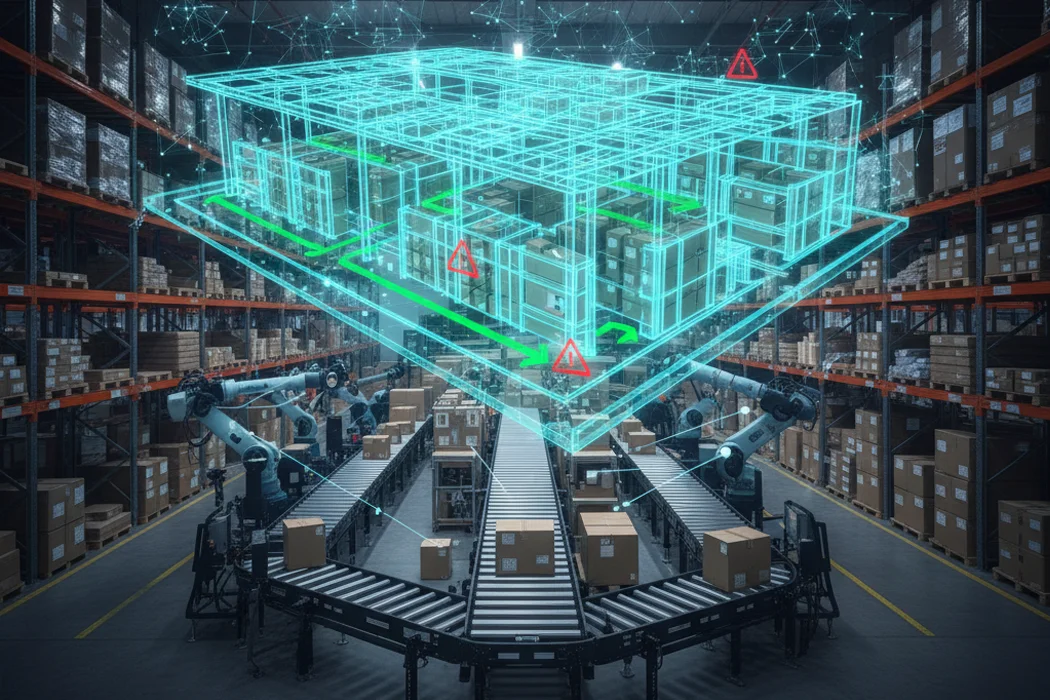
In the retail sector, the application is even more tangible. A retail chain can set up an agent that automatically places orders when stock runs low. The agent simultaneously monitors supplier performance, identifies delayed orders, and suggests redirection to alternative suppliers. The Digital Twin Composer example introduced by Siemens and PepsiCo at CES 2026 can simulate supply chain scenarios with physics-level accuracy before any physical change is made.
Concrete ROI Data: Impact by the Numbers
IDC predicts an average of 19 percent higher ROI in supply chain AI applications compared to traditional automation. Companies with higher AI investments report 61 percent greater revenue growth than their peers.
According to research by IBM, companies anticipate a 36 percent improvement in procurement compliance, a 34 percent increase in inventory turnover, and a 43 percent improvement in real-time spend visibility by 2027. AI-powered innovations can lower logistics costs by 15 percent, optimize inventory levels by 35 percent, and increase service levels by up to 65 percent.
Investment appetite is also strong: 85 percent of executives plan to increase their AI spending in 2026. However, patience is required; while only 6 percent of companies see ROI in less than a year, most achieve satisfactory returns within 2-4 years.
These figures indicate that agentic AI is not a fleeting trend, but a measurable investment decision. However, numbers alone are not sufficient; every company must establish a realistic timeline based on its own process maturity. For B2B companies in Turkey, this duration may shorten or lengthen depending on the maturity of the existing data infrastructure.
Risks and Governance
Agentic AI brings new types of risks with it: prompt injection, privilege escalation, memory poisoning, and cascading failures are just a few. If the orchestration agent is compromised, an attacker could gain access to all connected subsystems.
The greatest pitfall is the gap between technological excitement and business value. According to a study by MIT, 95 percent of AI pilot projects produce no value because companies begin investing without clarifying what business problem they are solving.
Gartner's February 2026 survey indicates that 55 percent of supply chain leaders expect agentic AI to reduce the need for entry-level hiring. This requires human resource planning to be re-evaluated.
Industry surveys show that 78 percent of supply chain leaders expect disruptions to increase in the coming two years, but only 25 percent feel prepared. This gap makes agentic AI a resilience tool rather than a luxury. On the governance side, four elements stand out: limiting the systems accessible to the agent, logging every decision along with its rationale, requiring human approval at critical thresholds, and conducting regular independent audits.
Agentic AI and the KVKK Framework in Turkey
The Personal Data Protection Authority (KVKK) brought the subject directly onto its agenda by publishing an official page titled "Agentic AI". The Authority also published separate recommendations regarding the use of generative AI tools in workplaces.
Because supply chain agents process supplier, order, and logistics data, KVKK's principles of data quality, purpose limitation, and accountability come directly into play. Which data the agent accesses and what decision it takes on what grounds must be traceable.
In Turkey, EDI-based data flow is already widespread in retail and automotive supply chains; this infrastructure makes structured data readily available to feed agentic AI. Order, dispatch note, and stock data gathered by B2B integration providers like MAP form a natural starting point for agent-based systems.
How to Get Started with Implementation
First, select a narrow, measurable process: such as stock replenishment or shipment exception management. Starting with a broad transformation increases the failure rate highlighted by MIT.
Clearly define the data sources the agent will access and its decision boundaries. Determine in advance which decisions the agent can make autonomously and which require human approval.
Compare pilot results with numerical targets: such as inventory turnover, delivery time, and compliance rate. After results are validated, expand the scope gradually.
Test whether your data infrastructure is ready from the start. When fed with fragmented or inconsistent data, agentic AI produces incorrect decisions. If a standard data flow already exists between your EDI and ERP systems, this will significantly accelerate the pilot process. Otherwise, fixing data quality first takes precedence over setting up agents.
Involve your team in the process. If planners and operations specialists do not trust the agent's recommendations, they will stop using the system. Reducing unnecessary alerts and presenting the reasoning behind decisions transparently is one of the most effective ways to accelerate adoption.
Conclusion
Agentic AI is evolving in the supply chain from a tool that gives recommendations into a layer that executes operations. The concrete ROI data is real, but MIT's 95 percent failure statistic is just as real.
Success depends on starting with a narrow scope, establishing clear decision boundaries, and embedding KVKK compliance into the design from the start. For B2B companies in Turkey, existing EDI infrastructure offers a significant initial advantage in this transformation.
You can visit the MAP Blog page for our other articles on the subject. When established with the right boundaries, agentic AI transforms into a competitive advantage in the supply chain.
Frequently Asked Questions (FAQ)
What is agentic AI and how does it differ from traditional AI?
Agentic AI is an AI system that, when given a goal, plans and executes steps on its own. Traditional AI offers suggestions, whereas agentic AI completes the process end-to-end autonomously.
Which tasks can agentic AI handle autonomously in the supply chain?
It can complete tasks such as inventory replenishment, shipment route alteration, supplier risk analysis, and invoice-contract compliance checks without human intervention.
How long does it take to see a return on investment in agentic AI?
According to industry surveys, most companies achieve satisfactory ROI within 2-4 years; only 6 percent see results in less than a year.
What is the biggest risk of agentic AI in the supply chain?
The risk of unauthorized access to all connected subsystems if the orchestration agent is compromised, and investing in technology without clarifying the business problem, are the most critical risks.
What should be considered regarding KVKK when using agentic AI?
The Personal Data Protection Authority recommends complying with principles of data quality, transparency, and accountability, ensuring that data processed by agents is strictly limited to its intended purpose.
ODEX EDI Gateway to the Supply Chain
An EDI gateway suitable for businesses of all sizes, ODEX centralizes communication and formats documents differently. This includes EDIFACT, VDA, TRADACOMS and PEPPOL.
Explore the solutionRequest a demo →