
Contents
Digital Twin Technology in the Supply Chain
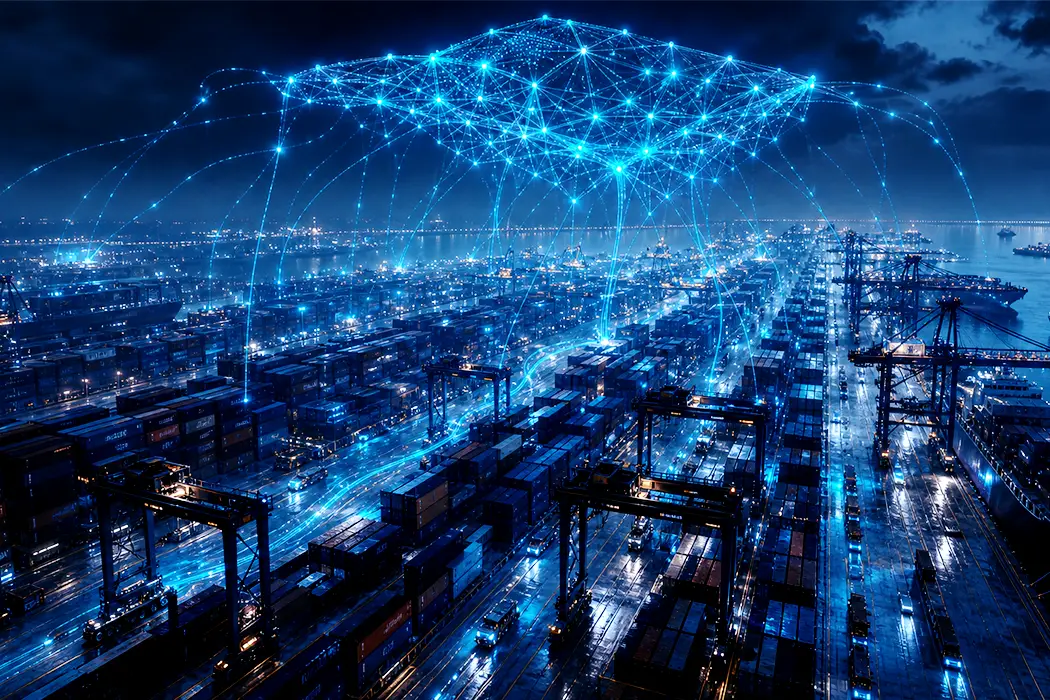
Following a decade of rapid evolution, the supply chain has undergone a profound transformation through digitalization. It is noted that at least 50% of major global enterprises will leverage artificial intelligence by 2023. As a direct consequence of technological impact, while the supply chain continues to evolve and innovate, real-time capability has become critically essential. Within this framework, we have summarized the role of digital twin technology in the supply chain.
What Is a Digital Twin?
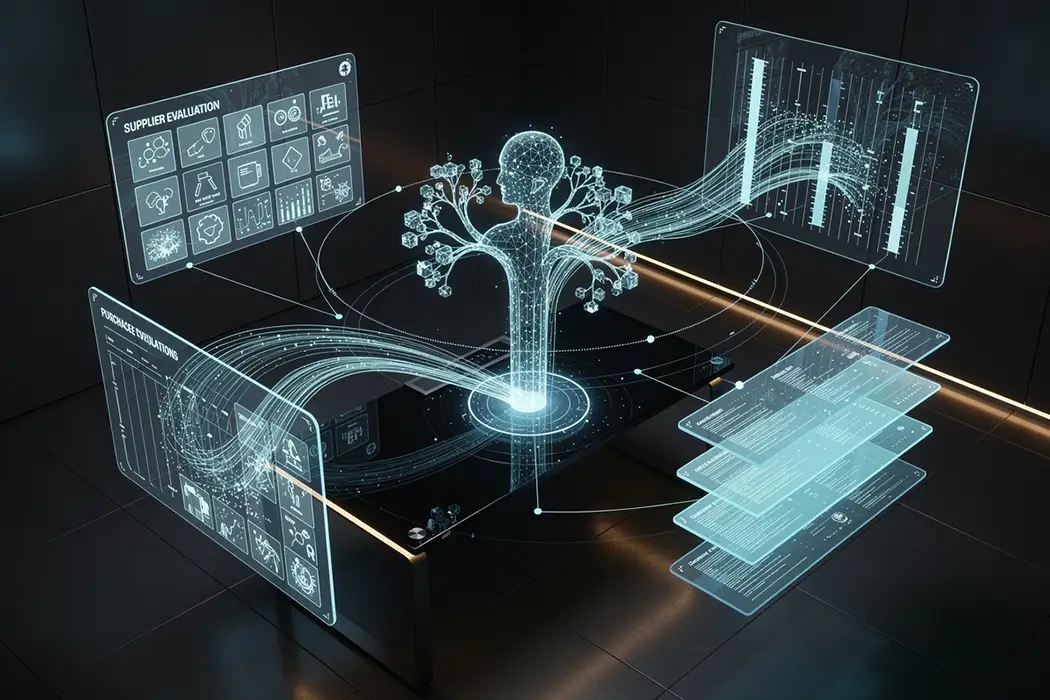
Industry 4.0 provides a technological infrastructure focused on digitalization and analytics capabilities to define events in real time. Building on this infrastructure, digital twins are virtual models that enable existing systems and proposed scenarios to be tested, allowing verification before final system designs are implemented. In other words, a digital twin can be defined as a one-to-one virtual replica or reflection of a physical system or service. Having gained significant attention in recent years, this technological application was ranked among the top 10 strategic technologies in 2017 and is set to feature even more prominently in the future.
The Function of Digital Twin Technology in the Supply Chain
Experiencing the domino effects of the global COVID-19 pandemic on the global economy, businesses recognized their vulnerability to disruptions and the vital importance of contingency planning. Moving forward, they aim to navigate future crises with greater experience. As demand patterns or supply characteristics shift and various disruptions arise, enterprises seek the capability to intervene continuously and rapidly through responsive strategies. Naturally, agility and reflexes against inherent supply chain risks and potential crises will be unlocked through technology. At this juncture, digital twin technology can be deployed to resolve ongoing supply chain crises and requirements.
Holding a prominent place among future technologies, digital twins allow businesses to identify supply chain bottlenecks in advance, improving planning and governance across end-to-end networks. Today, the supply chain is defined as "a complex network of entities requiring an end-to-end representation that can be used to respond to market pressures, external factors, and internal considerations"—and this model is embodied by the digital twin concept. Developed with advanced capabilities such as artificial intelligence, machine learning, and optimization, digital twins can be utilized to optimize diverse supply chain operational processes through simulations. Digital twin applications can model facilities such as factories, contract manufacturers, distribution centers, transportation routes, and customer locations. Businesses can leverage digital twins to evaluate complex, interdependent operational workflows across capacity, service levels, inventory, and landed costs.
Contributions of Digital Twin Technology to the Supply Chain
In an era where real-time visibility is paramount, digital twin technology directly fulfills this need. Digital twins simulate all assets and interconnections within complex, multifaceted supply chains, helping overcome operational hurdles. Implementing a digital twin within an operational workflow provides complete visibility over the entire production cycle. Consequently,
immediate intervention becomes possible. By leveraging real-time data, every supply chain action becomes visible, ensuring alignment with day-to-day requirements. Furthermore, by running experiments and simulations in a virtual environment, digital twins offer the opportunity to test part compatibility, manufacturing, and assembly beforehand. This saves time while enabling responsive operational maneuvers. Through bottleneck forecasting, digital twin technology helps identify potential constraints, determine additional capacity requirements, reduce asset idle time, and optimize inventory positioning. Another key advantage is identifying risks and opportunities by simulating specific execution plans within sales and operations planning (S&OP). Through insights and evaluations, processes are refined and optimized, preventing flawed strategic orientations and system constraints. Derived insights also ensure inventory scaling aligns precisely with market demand.
Offering the ability to optimize overall supply chain architecture, digital twins are utilized across major global sectors such as aerospace and automotive, while rapidly expanding into other industries. With technological progression, widespread adoption across most enterprises is anticipated in the near future. Therefore, both digital twin technology and complementary applications rooted in Industry 4.0 infrastructure will continue reshaping the global supply chain landscape. To achieve sustainable transformation, enterprises must adapt swiftly to this evolution with a visionary approach. To generate new insights and leverage them effectively, they must review all business processes and modernize operations to integrate new digital platforms and applications.
Sources:
*https://www.coupa.com/products/supply-chain-designthe-digital-supply-chain-twin-an-emerging trend-to-reveal-interconnected-insights Access Date: 19. 06. 2022 *
ODEX EDI Gateway to the Supply Chain
An EDI gateway suitable for businesses of all sizes, ODEX centralizes communication and formats documents differently. This includes EDIFACT, VDA, TRADACOMS and PEPPOL.
Explore the solutionRequest a demo →