Contents
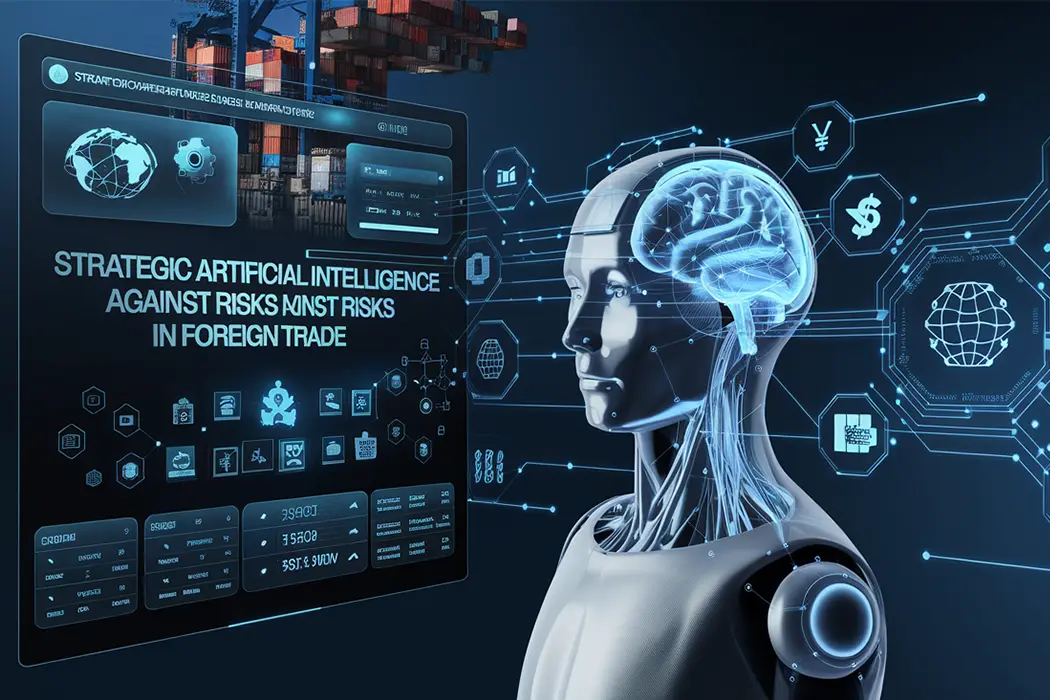
Foreign trade is the backbone of the global economy: a dynamic process in which commercial relations between countries are complex, highly detailed and intensive. Because of this, international transactions carry a much higher risk than domestic trade. If these risks are not assessed properly, they can lead to serious costs and damage a company's reputation. The large volume of data generated by international trade flows is used to improve business processes and keep improving them. This is what makes it possible to anticipate and minimize potential risks with artificial intelligence (AI).
Understanding how to reduce foreign trade risks helps companies manage those risks effectively, make strategic decisions and improve their operations. The relationship also works the other way round: sound strategic decisions and successful risk management in turn make it possible to reduce or prevent risks.
How AI Reduces Risk in Foreign Trade
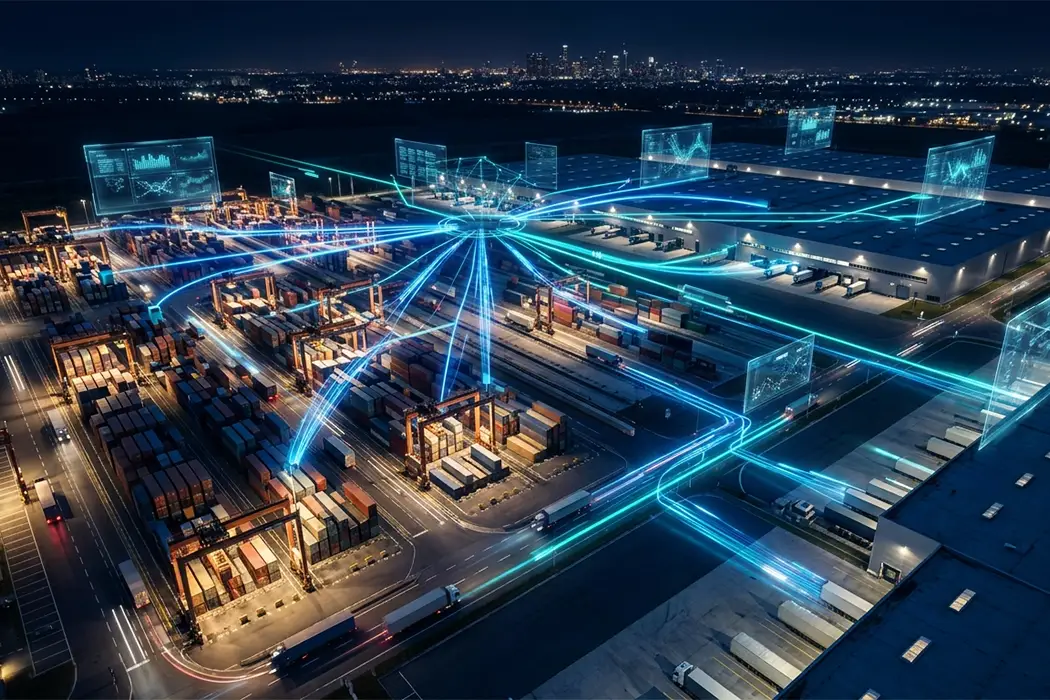
Risks in foreign trade have many sources: political risk, exchange rate risk, commercial risk, transport damage, advertising risk and risks linked to document exchange. With AI, automation and integrated solutions, foreign trade operations can run accurately, quickly and reliably, without human error. Through integrated systems, AI can handle transactions between companies automatically, including customs procedures, document management, logistics and financial transactions, along with the many detailed and complex documents they involve. Documents prepared almost flawlessly, quickly and at low cost, and above all without the crises that human error can trigger, can be exchanged in a standard format with trading partners in any country. In an automated, integrated system that sends all these documents to the counterparty and receives them from it, big data analytics can draw on historical global trade data to analyze the business from every angle and identify risks. The same data shows how external factors such as economic indicators, political events, natural disasters and trade policies affect the company. Companies that use machine learning to build predictive models and identify the risk factors they may face can anticipate potential risks and take precautions.
AI can simulate different risk scenarios and their likely outcomes, and being prepared helps companies reduce risk. To keep foreign trade operations from becoming vulnerable to cyberattacks, AI can detect cybersecurity risks and support preventive measures. For example, it can monitor network traffic, spot unusual activity, and report and block potential cyber threats. It thus lays the groundwork for reducing or anticipating risks in data privacy and cybersecurity, one of the most important issues in foreign trade. AI can monitor global trade networks continuously and detect anomalies or potential threats. An unusual delay in a supply chain or rising political risk in a region, for instance, can be spotted early, so that proactive measures can be taken.
Customs and logistics are among the most important processes in foreign trade. AI technologies should be used to speed up customs procedures, and by helping detect fraud they allow the related foreign trade risks to be kept under strategic control and managed. AI can optimize supply chains to cut costs and reduce risks at the same time. With AI support for finding alternative suppliers, choosing the best shipping routes and setting optimal inventory levels, companies cope better with uncertainty because they become more flexible and agile. Flexibility and agility are among the most critical issues in foreign trade. Since companies need to adapt quickly and find solutions fast during unexpected events such as natural disasters or political uncertainty, AI technologies often become a vital lifeline. AI can also predict customer and market behavior: analyzing that behavior to anticipate demand fluctuations and market trends helps organize operations and reduce risk. Companies can then manage their commercial position more easily in both domestic and global markets, take data-driven strategic steps before entering risky markets and protect themselves against potential losses.
Why Strategic Use of AI Matters
The strategic use of AI in foreign trade can be defined as making strategic use of these technologies' ability to process and analyze large volumes of unstructured data faster and with less human intervention. Used strategically, AI has the potential to fundamentally transform how companies handle risk management, one of the most critical elements of foreign trade. Big data analytics, machine learning and predictive models in particular now go hand in hand with lower costs and higher efficiency and productivity. A risk plan supported by such innovative tools offers strong solutions for identifying uncertainty at every stage of trade, spotting threats early, preparing for them and developing countermeasures. The same technology, which also helps banks and financial institutions with lending decisions and operational processes, enables companies to reduce compliance costs and make sound strategic management decisions. These proactive measures also strengthen the company's position in managing its relationships.
Developing automated decision support systems for trade transactions is an important strategic opportunity for AI. Because these systems recommend the best trading strategies based on available data and risk analyses, senior management can make decisions faster and the company can make better-informed choices. Reducing uncertainty in foreign trade through data-driven analysis depends directly on how strategically AI is used in big data analysis and on how future trade trends are tracked and acted upon. This, in turn, is reflected in the corporate reputation that supports foreign trade. With AI, the actions a company takes to strengthen reliability, transparency and accountability, the qualities that directly shape its reputation, are far more achievable than with traditional methods. This also helps prevent commercial risks that arise from business relationships.
Strategic Planning for AI in Foreign Trade
Strategies for using AI effectively in foreign trade aim to make the most of its potential and minimize risks in trade processes. The most important step for strategic use is a company-specific AI integration plan. The plan can be expanded or revised over time as needs change, and sometimes in response to new developments in modern technology. When the demands of the times and the company's own needs are considered together, integration becomes more systematic and successful.
Risk management works in four main categories: planning, assessment, risk mitigation and risk monitoring. In the same way, AI systems are defined strategically through a plan that sets out how AI will be integrated into foreign trade operations: which system will be used where and how, which processes will be automated and which risks will be addressed first. The most critical part of the work is deciding at which stages AI applications will be introduced, based on the company's existing infrastructure and goals. The support of an expert, experienced consultancy is invaluable here. Please contact us to benefit from our solutions that create a competitive edge in foreign trade and from the MAP team's friendly, solution-oriented specialists, available 24/7.
Strategies for Reducing Risk in Risk Management
A strategy of making decisions data-driven with AI allows a company to manage its decision-making jointly across many areas, from marketing and communications to human resources and budget management. In risk management, data-driven decision-making matters on its own, but it also shapes the impact of these shared decisions to a large extent. Decisions become more objective, are based on data-driven insights and stay aligned with market trends. AI-supported decisions improve risk management considerably, especially when choosing trade routes, analyzing market trends and managing the supply chain.
Developing AI simulations is an important strategic management approach that identifies potential risks and enables proactive action. Simulations let companies anticipate and test risks in international trade processes in advance. The better prepared a company is for risks, the more easily it can overcome crises, and it may even turn crises into opportunities. AI simulations show how different scenarios would play out, and by learning from them the company becomes more resilient to such situations. This also strengthens its crisis management capability and is a valuable investment in its corporate reputation. Strategies like these help a company build the ability to learn continuously, improve itself and adapt quickly to market conditions. As a result, it can respond faster and more effectively to new risks that emerge in trade processes.
Another valuable strategy in the strategic use of AI is to systematize the analysis and monitoring that give a company visibility into global trade activity. Monitoring and analyzing global trade networks in real time means focusing on anticipating problems or anomalies on trade routes, occasional market fluctuations and actual or potential supply chain disruptions, and taking action against them. Integrated systems built for AI-based monitoring and analysis make it possible to analyze risks continuously at every stage of trade and to intervene immediately. AI should also be used to monitor international trade conditions, government rules and other regulations, and to ensure that trade transactions comply with them. This strategy reduces the related legal risks and supports professional, secure operations in the global trading environment. Likewise, managing cybersecurity and privacy risks requires a continuous focus on detecting threats and potential problems in this area. With this strategic approach, monitoring network traffic to detect unusual activity and building proactive defenses against cyberattacks helps the company strengthen its cybersecurity and avoid damage.
AI also makes it possible to focus on, and invest in, relationships in foreign trade. Managing relationships with suppliers and other counterparties in foreign trade is an area highly prone to crises. A strategy that covers the strategic actions available in this area makes it possible to manage the risks arising from commercial disputes. Analyzing supplier performance with AI is a valuable strategy: companies can act on, or prepare backup plans for, risky suppliers and potential problems or disruptions. For example, finding an alternative to a raw material supplier whose production has stopped after a disaster is vital for keeping trade flowing. AI insights can help find such alternative suppliers and develop contingency plans. Problems in supply chain relationships and supply chain security can be detected early. Integrating smart contracts, blockchain technology and AI to automate commercial contracts is a strategy that secures foreign trade relationships and makes them far more transparent and accountable.
B2B/EDI Integration
MAP's B2B/EDI integration connects ERP systems and business partners, with support for protocols such as AS2 and OFTP2 and standards such as EDIFACT and VDA.
Explore the solutionRequest a demo →