Contents
In today's business world, corporate executives allocate massive budgets to technology investments to maintain their competitive advantage. However, there is a bitter market reality: no matter how large the budgets companies allocate to B2B digital transformation projects, the vast majority of these projects never achieve their goals. Many companies assume that launching a "B2B e-commerce" platform or purchasing new software is the essence of digitalization itself. Yet merely purchasing new software is no different from painting the branches of a tree whose roots are rotten. When you add a brand-new technology layer on top of existing operational issues without resolving them, you only begin producing existing problems faster and at a higher cost.
So why do these projects, executed under the guidance of major tech giants, continually hit a wall? Where do enterprises misallocate their budgets? Which blind spots drive supply chain automation and B2B e-commerce projects toward disaster? In this article, we examine the structural issues behind B2B digital transformation failures, the destruction caused by data silos, and why steps taken without robust foundations such as EDI integration collapse.
Unchanged Failure Rate Despite Record Investments
In recent years, enterprise investments in technology have reached astronomical levels. According to IDC's Worldwide Digital Transformation Spending Guide report, global digital transformation spending reaches 3.4 trillion dollars in 2026. Executives believe that the only way to modernize systems and avoid falling behind the market is to continuously purchase new technologies.
However, the other side of the coin is far from bright. Digital transformation studies from McKinsey and Boston Consulting Group point out that approximately 70% fail to reach their goals. Reading this figure requires a caveat: the two institutions define success differently, and measurement relies largely on executives' self-assessments of their own projects. Thus, 70% is not a strict laboratory measurement, but the common diagnosis of the industry. Nonetheless, the fact that this picture has not changed for years despite billions of dollars in investment clearly indicates that the problem does not lie in "the technology itself." Companies purchase the world's best e-commerce infrastructure or the most expensive ERP (Enterprise Resource Planning) system. Yet when projects go live, they watch with bewilderment as orders are still entered manually, incorrect shipments continue, and customer satisfaction fails to improve. Behind this major frustration lie four fundamental mistakes.
1. Focusing on Technology and Ignoring Business Processes
The biggest fatal mistake B2B companies make is viewing digital transformation merely as an "IT department project" or a "software update." Rather than redesigning problematic and slow existing processes from scratch, executives attempt to carry the same inefficient processes into the digital environment.
For example, when a customer places an order via a B2B portal, if the sales team in the background still pulls this order into an Excel file and emails accounting, no digital transformation has taken place. You have simply decorated the first step of the process. Technology cannot fix a broken business process on its own. Successful companies put all their business processes on the table months before purchasing a software license. They simplify processes by asking, "Why do we do this work this way?" After completely eliminating inefficient and manual steps, they empower the remaining optimized processes with technology. Every project that skips process optimization ultimately turns into failed technological waste.
2. Organizational Misalignment and Data Silos
Another major factor rotting projects from within is departments operating completely disconnected from one another. Companies generally function in "silos." Marketing uses its own database, sales maintains a separate CRM system, and the logistics team looks only at its own warehouse management software.
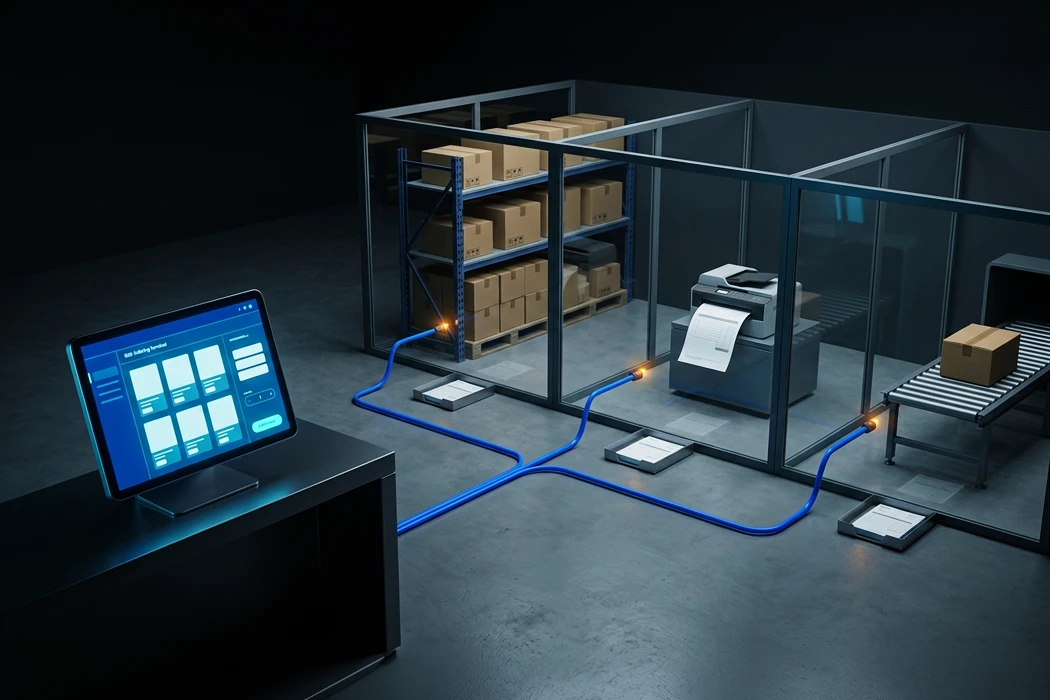
When you launch a B2B e-commerce project, dismantling these silos is essential. However, companies are often hesitant to unite their data. When a customer enters a B2B site, they expect to see their customized pricing. When they place an order, they want to know stock status in real time and track their shipment live. If your sales, finance, and logistics systems do not communicate with each other, meeting these expectations is impossible. Different departments working with different data guarantees there will be no "single source of truth." Taking digital steps without achieving organizational alignment, without bringing teams to the same table, and without unifying departmental systems into a single data stream will only drag you into greater chaos.
3. Skipping the Preparation Phase and Integration Foundations
If you try to build the 50th floor of a skyscraper without securing the foundation, the building will collapse in the slightest wind. In B2B digital transformation projects, the "solid foundation" consists of clean data and flawless system integration. Driven by project excitement, many companies skip this vital preparation phase or postpone it, saying "we will solve it after going live."
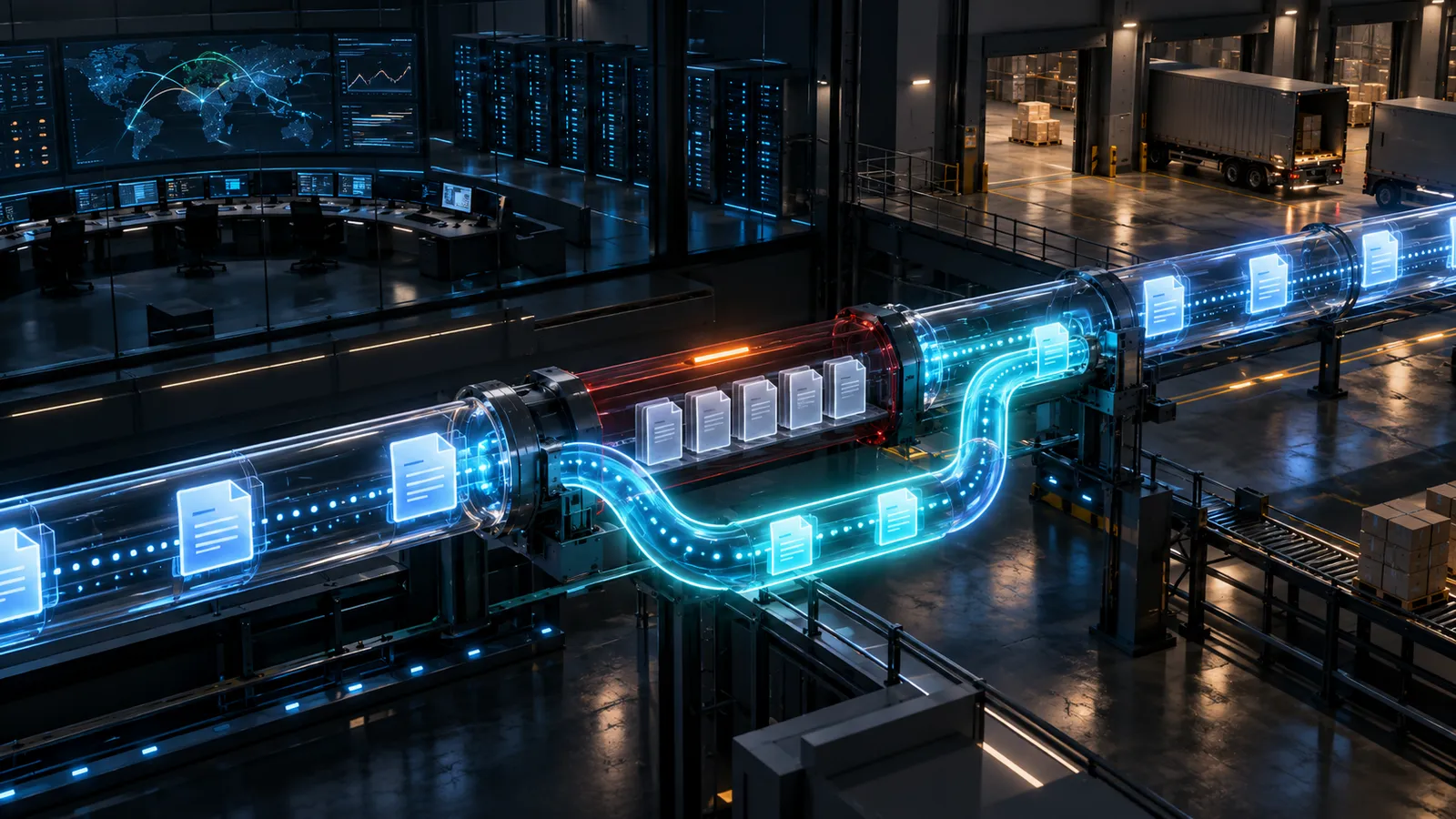
This is precisely where EDI (Electronic Data Interchange) integration comes into play. Manual entry of data coming from business partners, suppliers, or your own branches is the greatest enemy of digital transformation. If your company's ERP system, B2B e-commerce platform, and suppliers' logistics systems cannot communicate automatically, you are forced to assemble a massive army of data entry staff in the background. Companies that fail to establish EDI infrastructure encounter countless human errors when transferring orders from B2B portals into the ERP system. Mistyped product codes, mismatched prices, and lost dispatch notes damage customer relationships irrevocably. Firms that do not build a robust EDI architecture and API infrastructure at the very start pay heavily for integration errors.
4. The Chaos Behind "Polished" Interfaces in B2B E-Commerce
Emulating the flashy world of B2C e-commerce, B2B companies often spend their entire budget on front-end design and great-looking catalogs. The interface the customer sees on the screen functions flawlessly, and everything looks modern. However, if the "Place Order" button clicked by the customer is not connected to any backend systems, that polished interface loses all value.
B2B buyers act rationally. For them, rather than the design of the e-commerce site, what matters is whether the system keeps its promise. If a customer receives an email three days after ordering a product marked "in stock" stating "The product is out of stock, we are trying to procure it," that ornate interface loses all credibility. No B2B platform whose backend systems are not powered by ERP and EDI integrations, and which cannot process orders, inventory, and invoices automatically, can survive in the long term. Customers quickly notice this chaos behind the scenes and immediately switch to competitors whose operations run smoothly and whose order processes are transparent.
What Must You Do to Break the Cycle of Failure?
Escaping this gloomy picture and joining the successful 30% minority is not as impossible as it seems. To break the cycle of failure, you must set aside technology fetishism and focus directly on the fundamentals: processes and data.
Your first step should be critically evaluating your current state. Which department slows down processes? At what stage are you still entering data into the system manually? Identify these bottlenecks and streamline your processes. In the second step, tear down those massive data silos within the organization. Ensure that all departments see the same data and work toward the same goal. The third and most critical step is laying flawless integration foundations. Connect your company's e-commerce infrastructure, ERP system, and business partners with a robust Enterprise EDI architecture. Make data flows autonomous. When you reduce manual intervention close to zero, you will find that those expensive technologies finally work and deliver genuine competitive advantage.
Frequently Asked Questions (FAQ)
What is the failure rate of B2B digital transformation projects?
Studies by McKinsey and Boston Consulting Group point out that approximately 70% of digital transformation initiatives fail to reach their goals. Projects are either canceled entirely or companies fall far short of targeted efficiencies. It should also be taken into account that this rate is not an exact measurement, as both institutions define success differently and data is based on executive self-reporting.
Where do companies make the most mistakes in digital transformation projects?
The biggest mistake companies make is attempting to add a new layer of software on top of existing, inefficient business processes without fundamentally improving them. Transferring a manual and sluggish process to a computer screen does not make you digital.
Why does EDI integration play a critical role in digital transformation?
EDI (Electronic Data Interchange) connects systems across different departments, suppliers, and customers, completely eliminating data silos. It automates operational processes by transmitting critical documents such as orders, dispatch notes, and invoices without human intervention.
How does interdepartmental data disconnection affect projects?
Sales, logistics, and finance departments using disparate systems directly disrupts the customer experience. Projects launched without establishing a common data infrastructure quickly stall due to data discrepancies in product pricing or inventory status, creating distrust among customers.
How should I take the first step for a successful B2B e-commerce project?
Before selecting technology or platforms, you must audit your company's existing processes and data quality. After optimizing problematic steps, lay the foundation for automation by integrating data flows across your ERP, CRM, and e-commerce platforms with a strong EDI architecture.
Conclusion
As of 2026, digital transformation is no longer a "preference" but the very struggle for survival. However, the 70% failure rate teaches us a clear lesson: visionless technology spending does not save companies. If you do not want your projects to end in frustration, stop hiding behind fancy interfaces. Redesign your processes, tear down walls between departments, and connect your entire ecosystem with robust EDI integration. The firmer your foundation, the stronger and more resilient you will be in the digital world.
To increase your supply chain visibility, strengthen your data integration strategies, and succeed in operational automation, you can continue accessing all in-depth analyses on our MAP Blog page.
ODEX EDI Gateway to the Supply Chain
An EDI gateway suitable for businesses of all sizes, ODEX centralizes communication and formats documents differently. This includes EDIFACT, VDA, TRADACOMS and PEPPOL.
Explore the solutionRequest a demo →