
Contents
The supply chain is an area that involves a significant portion of a company's operations, characterized by a complex network of business processes that demand intense energy. Therefore, in the supply chain where environmental sustainability efforts are expected to have the most meaningful impact, businesses can make a substantial difference for the world by moving forward with sustainability awareness.
Solutions aimed at continuous improvement in a circular supply chain enable strong steps towards sustainability goals. On the other hand, due to the nature of different business processes and the involvement of various companies, circular supply chains are fraught with challenges in practice. Here's an overview of the topic.
Sustainable Supply Chain
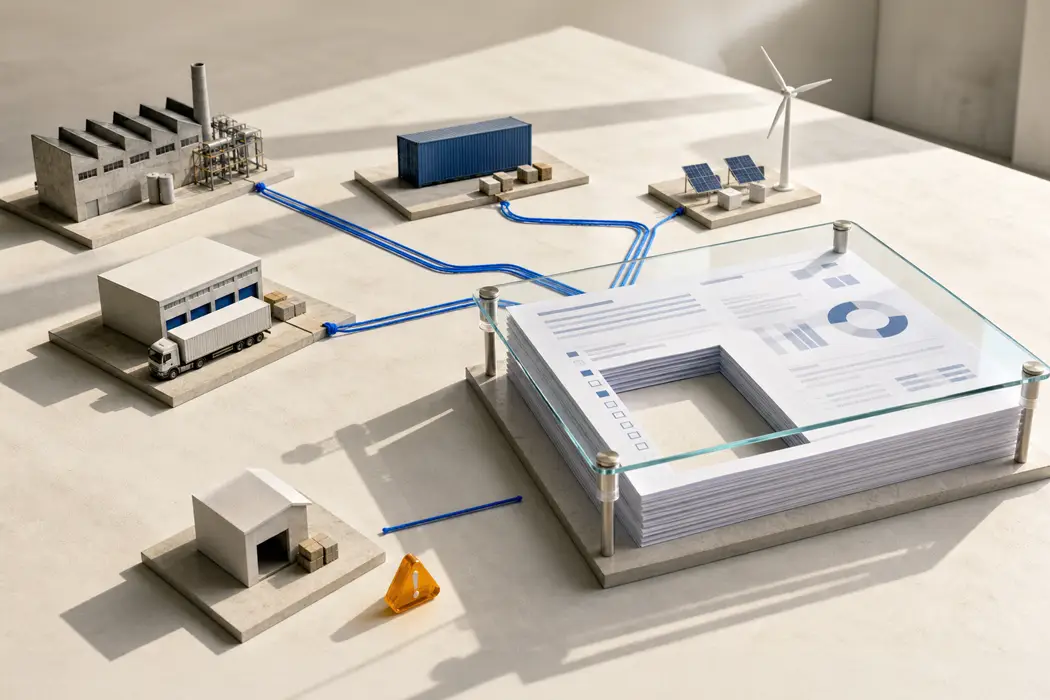
A supply chain encompasses a series of complex processes including material procurement, production, logistics, and distribution, often spanning a global network with various stages. Companies interact with a range of suppliers, subcontractors, and partners as they produce their products and services. The interconnected nature of these processes means that responsibilities in supply chain management regarding sustainability also increase proportionately. Sustainability in the supply chain is directly related to all processes within the supply chain, rather than being solely under the company's control. Environmental sustainability issues such as limited natural resources and greenhouse gas effects largely arise from the cumulative impact of these processes. Therefore, adopting a circular supply chain is crucial in the search for sustainable solutions.
What is Circular Supply Chain and How is it Achieved?
In the supply chain, the management approach aimed at enhancing resource efficiency and environmental sustainability is known as "circular supply chain." In other words, a circular supply chain is a management approach focused on more efficient use of limited natural resources and reduction of waste, based on solutions such as "using materials and goods for as long as possible instead of immediately discarding them." This approach, which covers all processes from product design, represents a much more environmentally friendly and ecological approach compared to traditional supply chain models and allows businesses to act with awareness of their environmental responsibilities.
In a circular supply chain, manufacturing companies reintegrate raw materials like paper, plastic, aluminum, glass, metal, cardboard, and steel derivatives into production for reuse. Thus, the resale of produced goods creates a green loop. It is also possible to participate in this circular approach by leasing products instead of purchasing new ones. Circular solutions such as recycling, upcycling, green storage, and packaging are among the measures that can be implemented for adopting and applying circular approaches throughout supply chain processes. For example, computer manufacturers use some raw materials required for new computer production by promoting campaigns for the return of old computers. This method can be used in many supply chain processes.
Circular Supply Chain vs. Linear Supply Chain
The circular supply chain, aligned with green and sustainable supply chain management practices, differs in many ways from traditional supply chain management. The ideals of circular economy principles focus on the reuse of limited natural resources and create environmental benefits in terms of carbon emissions. Circularity requires a managerial perspective and provides tangible environmental benefits within sustainable supply chain management.
In a circular supply chain, raw materials used in products are transformed back into raw material form and reintegrated into production, thereby reducing waste. The primary benefit provided is environmental, although it also allows businesses to obtain raw materials at lower costs. Integrating circular economy principles within sustainable supply chain management can help businesses reach a level of responsibility towards the environment, making them more ethical, competitive, efficient, and successful.
Design and Technology in Circular Supply Chains
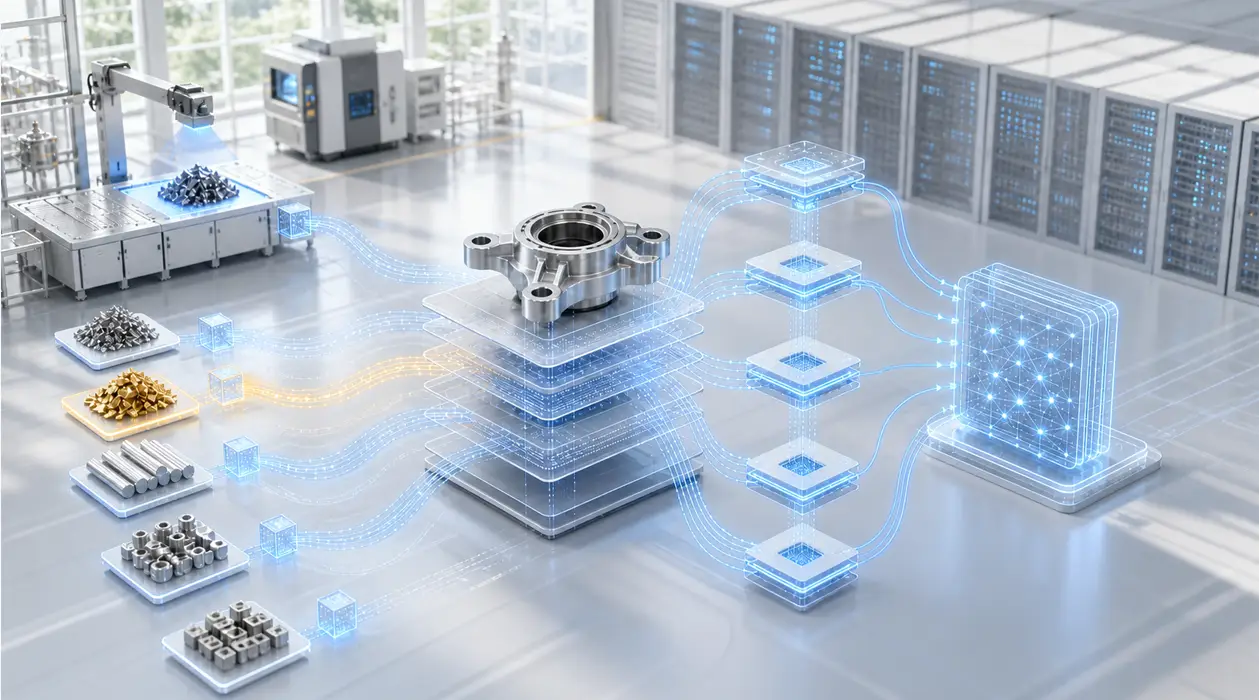
Modern technology allows recycled materials such as cardboard, paper, plastic, metal, and glass to be reused as raw materials and transformed into new products. For example, 3D printing uses recycled materials as the raw material due to increasing advancements. The power of circular raw materials is utilized in the production of new smart materials, modeling, and supply chain products that cater to various sectors. Additionally, product designs can be developed considering aspects such as storage, logistics, easy installation, and customer satisfaction within end-to-end management of the supply chain.
Companies that produce solutions to use raw materials more efficiently, recycle, and reduce packaging also develop their product design processes in line with sustainability goals. Solutions that ensure products are made with compatible and recyclable parts and are modular in use are examples of circular approaches in industrial design. This approach reduces unnecessary parts, achieves a creative and modern design, and produces products that are easy to assemble or disassemble without creating complexity. Thus, consumer demand for contributing to the circular system can be encouraged. It is anticipated that futuristic industrial designs will develop in this direction and greatly facilitate circular supply chains.
Technological innovations such as artificial intelligence, automation, and data analytics can be used to support the principle of circularity when integrated into supply chain processes. This makes it possible to manage processes more effectively and efficiently. Technologies such as artificial intelligence, automation, and data analytics can be utilized in research and development for production, durability, transformation, and circularity in processes, logistics, and conversion systems.
Challenges in Implementing Circular Supply Chains
The less frequent application of circular supply chains compared to linear ones stems from the difficulties in supply chain operations. Activities are carried out by different actors, and even consumers, stores that accept returns, and waste recycling companies need to be part of the circular process. In this case, even waste logistics or pre-processing of waste constitutes distinct business processes. Since all these processes are handled by different businesses, end-to-end circular management is more challenging and less common compared to linear management due to the concern of adding value to all participants in the chain. For recycling to be meaningful, the value obtained must be shared appropriately. For example, this can be said for products like gold or silver items or devices such as phones and computers. Furthermore, each participant in the supply chain needs to benefit from this and choose to participate. The impact of consumer choices on the circular supply chain is also crucial.
In conclusion, while experts express that the revival and widespread adoption of circular supply chains may give the circular economy a new dimension, it is not anticipated to happen in the near future. At least in the near term, preparing for and encouraging projects that mature the conditions by developing expertise for creating circular supply chains seems to be value-adding. Companies and large manufacturing facilities will need to prioritize directing their workforce towards this area and accept the "contentment with available resources" approach over the "growth" ambition. The role of the consumer at the end of the chain is crucial as well; choosing products that contribute to the circular economy and making informed decisions based on circular production and less sophisticated designs is of great importance. Although it is predicted that circular supply chains will not become as widespread as linear ones in the near future, efforts in this field are promising for accelerating the process of transitioning towards circular supply chains.