Contents
In recent years, the rapidly changing business environment with increasing global uncertainties and sudden disruptions has radically transformed supply chain management. Companies can no longer settle for merely being efficient; flexibility, agility, and the ability to make timely, pinpoint interventions have become a necessity. Fierce competition spanning from raw material procurement to the final product compels companies to advance in a multi-dimensional and systematic manner.
Beyond ensuring the flow of goods and services, prioritizing customer satisfaction and sustainability, as well as proactively managing disruptions, crises, and risks, is the critical aspect of business. It is well known that these disruptions lead to serious consequences such as financial losses, reputational damage, and diminished customer trust. In this context, strategic and proactive management for companies has gained importance, and as a result of technological advances, the "Self-Healing Supply Chain" has developed as a strategic vision.
What Is a Self-Healing Supply Chain?
Increasing geopolitical risks, natural disasters, pandemic impacts, logistics bottlenecks, and constantly shifting consumer demands are making traditional supply chains increasingly fragile. Research shows that approximately 80% of companies experience at least one major supply chain disruption. In recent years especially, the Covid pandemic left deep scars regarding supply chain disruptions.
In parallel with this complex landscape, accelerated digital transformation has made the need for a structure that moves beyond traditional reactive systems to become self-correcting and proactive in eliminating problems more critical than ever. It is precisely at this point that the concept of a "self-healing chain" emerged as the solution of the future.
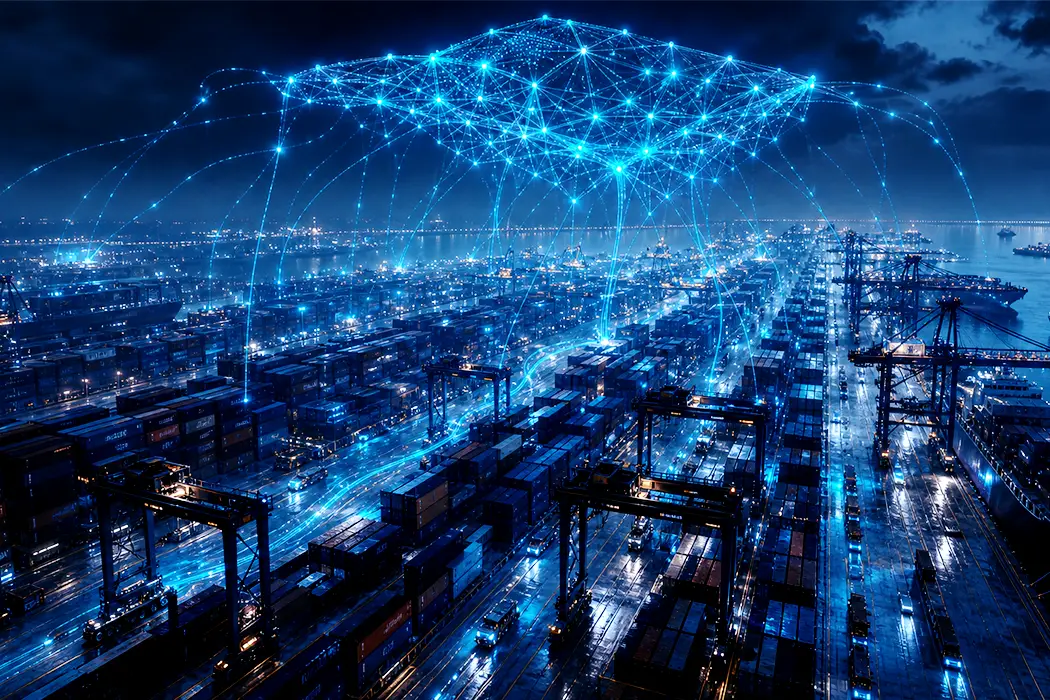
This system takes the phrase "self-healing" in its name from being autonomous. Supply chain technology can generate automated responses to prevent disruptive events or mitigate their impact. In other words, it is a system that not only detects problems, but also automatically triggers the resolution mechanism. This structure operates much like an autonomous ecosystem. It is supported by IoT (Internet of Things) sensors that continuously collect data, artificial intelligence (AI) algorithms that detect anomalies, blockchain applications that provide reliable information sharing, and autonomous systems that accelerate decision-making.
How Does a Self-Healing Supply Chain Work?
The future of supply chain management lies in the integration of advanced technologies. Thanks to this integration, relationships with stakeholders and customers gain a different dimension, making it easier to achieve sustainability goals.
A concrete example of a self-healing supply chain: the probability of a potential delay in international transportation can be predicted before it even occurs, and an alternative logistics route can be activated instantly. The value of this proactive power in the global supply chain is immense.
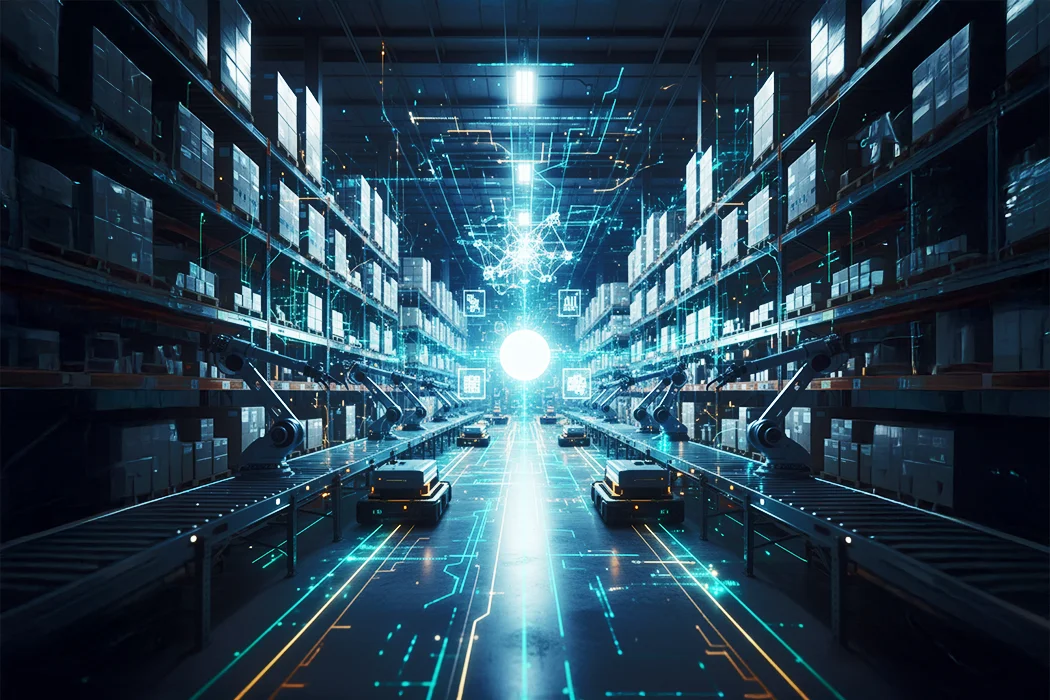
In the operation of the system, for instance, a machine component signaling an error on a production line can report the problem and simultaneously bring an alternative production source online to prevent production from halting. Using data, the system detects anomalies, identifies failure patterns through analytics, and predicts potential disruptions far earlier than traditional methods. In other words, it learns and improves accordingly.
For example, it predicts a delay in raw material procurement from a supplier and records this as a mode of learning rather than just an alert. It allows the system not only to recommend, but also to take action automatically within approved scenarios, such as updating purchase orders or reallocating inventory. Digital twins, taking this process a step further, offer the ability to test thousands of "what-if" scenarios on a virtual copy of the physical supply chain within seconds and determine the best response before applying it in the physical world. Thus, the chain can repair itself without needing human intervention, giving rise to a self-healing supply process.
Digital Transformation and Data Relationship: The Core
Data analysis plays a critical role in determining solutions to potential problems. The responses obtained are important because we are talking about an autonomous system that automatically selects the response and decides on and implements the solution. In a self-repairing supply chain, the heart of the interconnected digital mechanism is the autonomous response system. Therefore, digital transformation is the core of the self-healing supply chain. Defined data represents value in the autonomous system, and corresponding responses are automated with the help of decision intelligence technology.
In self-healing supply chains, we can think of digital transformation as a central brain that elevates data from being passive inventory. A brain that transforms the supply network into a virtual living nervous system that learns, adapts, and possesses the capability to make autonomous decisions... Advanced sensors, IoT devices, and integrated enterprise systems are used for this transformation. A continuous and real-time data flow encompassing every point of the supply chain spreads like an electrical current. Artificial intelligence and machine learning algorithms process this raw data, enabling data to become the driving force of digital transformation. Through this, supply chains transform into exceptionally flexible and intelligent systems. This capability carries invaluable worth for strategic decisions.
Strategic Importance of the Self-Healing Supply Chain
This system does not merely report data as an alert; it acts with contextual intelligence by analyzing the business impact of a delay, the availability of alternative suppliers, and the cost of the most suitable solution. The most notable feature of this approach is real-time visibility. Moreover, it does not limit itself to reacting only during crises; it also makes future problems more predictable through continuous learning capabilities, thereby offering a proactive perspective.
Thanks to insights gained from historical data, it can predict potential disruptions more accurately. Updating itself with each new piece of data, the system virtually transforms into a living, learning organism. This makes the supply chain not just reactive, but proactive and adaptive. This strategic capability, termed "decision intelligence" by experts, ultimately ensures that every decision and its outcome are recorded in a digital memory. Thus, the system continuously learns from its own performance, improves its algorithms, and manages a greater number of decisions autonomously over time. It evolves from a static heap of data into a dynamic and autonomous learning loop.
Through this, businesses can minimize costs while maximizing customer satisfaction and develop a much stronger resilience capacity in a world full of uncertainties. This strength translates into extraordinary efficiency for the supply chain.
According to Gartner's report, more than half of major manufacturing and logistics companies plan to implement self-healing chain applications by 2030. This means we will be discussing the management of autonomous supply chains much more frequently in the coming years. It is evident that this concept, seen as a vision today, will become a standard part of the business world in the near future. Experts attribute this to the supply chain structure acquiring an increasingly more autonomous character. Artificial intelligence can foresee future events and evaluate potential outcomes through complex calculations that human intelligence cannot anticipate.
The next step is to be able to act proactively to prevent their impact. In the future, supply chains will be able to make strategic decisions and act on their own. In other words, technology is advancing toward a structure that will "heal" itself by determining and executing the best action plan and roadmap on behalf of the enterprise. The role of businesses will be to transform their systems into a powerful supply chain equipped with such capabilities to govern this autonomy.
This is a revolution that provides strong clues about how industries will be shaped in the future and represents a critical threshold in companies' digitalization journeys. An enterprise keeping digital records of decisions taken and their outcomes will create a major strategic revolution by enabling the system to learn from previous results. By automating more business processes and decisions, it will propel supply chain processes to different dimensions at a revolutionary speed.
ODEX EDI Gateway to the Supply Chain
An EDI gateway suitable for businesses of all sizes, ODEX centralizes communication and formats documents differently. This includes EDIFACT, VDA, TRADACOMS and PEPPOL.
Explore the solutionRequest a demo →