Contents
Digital twins in the automotive industry are transforming the way vehicles are designed, manufactured, and maintained. Digital twin technology is making processes smarter by being used for real-time monitoring, simulation, and optimization across design and production lines. Thus, it opens the doors to a revolutionary transformation in the automotive industry. All processes, from the design phase of vehicles to the manufacturing process, from maintenance and repair routines to the driving experience, are being reshaped by digital twin technology. Located at the center of digital transformation, this technology equips companies with flexible manufacturing, sustainability, and data-driven decision-making capabilities, carrying the sector into a more competitive and dynamic future. We have compiled the use of digital twin applications in the automotive sector and their role in digital transformation for you.
What Is Digital Twin Technology? How Is a Digital Twin Created?
Digital twin technology, one of the concepts that entered our lives with digital transformation, is a dynamic and interactive virtual model of a physical object, system, or process fed by real-time data. By creating this model, the actual asset is operated and maintained more efficiently.
Supported by digital tools such as IoT, artificial intelligence, big data analytics, and cloud computing, this technology creates a digital copy of assets in the physical world. This is called a "Digital Twin." By continuously collecting data from the physical system via sensors, analyzing this data, and running simulations in a virtual environment, the digital twin offers the opportunity to test scenarios such as performance optimization, failure prediction, or design improvements. For example, by modeling the operating conditions of an engine—an engineering product—on a digital twin, potential failures can be identified in advance, or the efficiency of a factory production line can thus be increased in a virtual environment.
The fundamental strength and defining characteristic of this technology stem from establishing a two-way interaction between the physical and digital worlds. Just as changes made in the virtual model can be applied to the physical system, instantaneous changes in the physical system are also reflected in the digital twin. Being one of the building blocks of Industry 4.0, this technology provides cost savings, sustainability, and innovation in many areas, from manufacturing to healthcare, energy, and smart cities.
Digital Twin Integration in Automotive
Creating virtual copies of physical vehicles and manufacturing systems, this technology reduces costs while increasing efficiency and innovation through real-time data analysis and simulations. For instance, Tesla testing software updates on digital twins or BMW anticipating bottlenecks on production lines with virtual models to increase efficiency by up to 30% are just a few concrete success stories in the industry. Applications such as training autonomous vehicle algorithms in virtual environments, optimizing the battery life of electric vehicles, and offering personalized maintenance services to customers demonstrate the multifaceted impact of digital twins in the automotive industry.
This technology operates using sensor data collected at every step, from robotic systems on assembly lines to quality control stages. Data obtained in real time includes parameters such as temperature, vibration, production speed, and equipment wear; it is transferred to digital twin platforms, creating a detailed simulation of the production line. In this way, potential malfunctions or inefficiencies can be detected and addressed before the production process is disrupted.
Digital Twin Applications in Automotive Manufacturing Processes
Digital twin applications are used in diverse forms. Digital twin technology has become an important trend rapidly adopted in recent years, with a global market size exceeding $11.5 billion in 2023 and expected to exceed $125 billion by 2030. Considering that 75% of companies use digital twins for operational efficiency and 48% reduce maintenance costs by 30%-40%, this technology proves its potential as an innovative industrial solution.
This technology is utilized in various sectors and across automotive in diverse ways. The General Electric (GE) brand increased energy generation by 20% while reducing downtime by 50% by monitoring the performance of wind turbines with digital twins. Similarly, Siemens reduced energy consumption by 15% and increased production capacity by 25% by optimizing production lines with digital twins in its factories.
In the automotive sector, digital twin technology is embraced across various operational processes by many global giant brands. While Tesla reduced physical prototype costs by 60% by testing vehicle software on digital twins, Volvo designed systems capable of responding to crash scenarios with 95% accuracy by training autonomous vehicle algorithms in virtual traffic environments.
Production Line and "Twin-to-Twin" Communication
Digital twin technology makes processes smarter by being used for real-time monitoring, simulation, and optimization on automotive production lines. Applications begin with the creation of an exact virtual copy of the physical production line. The created copy is integrated with IoT sensors, PLC (Programmable Logic Controller) systems, and SCADA (Supervisory Control and Data Acquisition) infrastructure. For example, BMW, an automotive giant, models every component of the production line (conveyor belts, robot arms, assembly stations) in a virtual environment using digital twins in its factories. In this system, data from sensors (temperature, vibration, energy consumption) is transferred instantaneously to the digital twin. Thanks to this, issues such as bottlenecks on the production line, machine failures, or energy waste are detected in advance. Changes made in the virtual model (for example, increasing robot movement speed) can be automatically applied to the physical system. This process operates through "twin-to-twin" communication and delivers a 20%-30% efficiency increase in production.
Assembly Lines, Robotic Systems, and Quality Control Processes
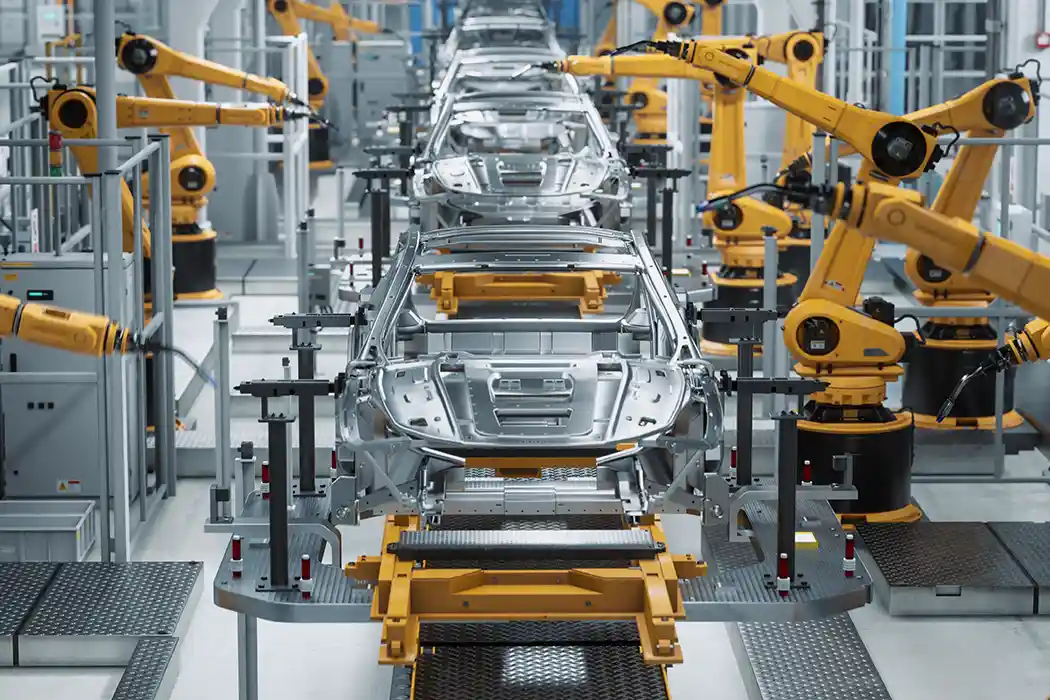
Digital twins enable the transformation of robotic systems coordination and quality control on automotive assembly lines. The physical movements of each robot on the assembly line are simulated on the digital twin, minimizing collision risks or timing errors. In other words, the assembly line is simulated to ensure accurate operation. For example, Tesla shortened assembly time by 15% by optimizing the movements of robot arms in the Gigafactory with digital twins. In quality control processes, cameras and laser scanners transfer the dimensional tolerances or surface defects of manufactured parts to the digital twin platform. Data obtained with the digital twin is analyzed in real time with the virtual model, and defective parts are automatically rejected. On the other hand, Toyota reduces defect rates by up to 40% by monitoring weld spot quality using digital twins. Additionally, maintenance needs of robotic systems (such as lubrication or component wear) are predicted by digital twins, preventing unplanned downtime.
Transferring Data to the Digital Twin Platform
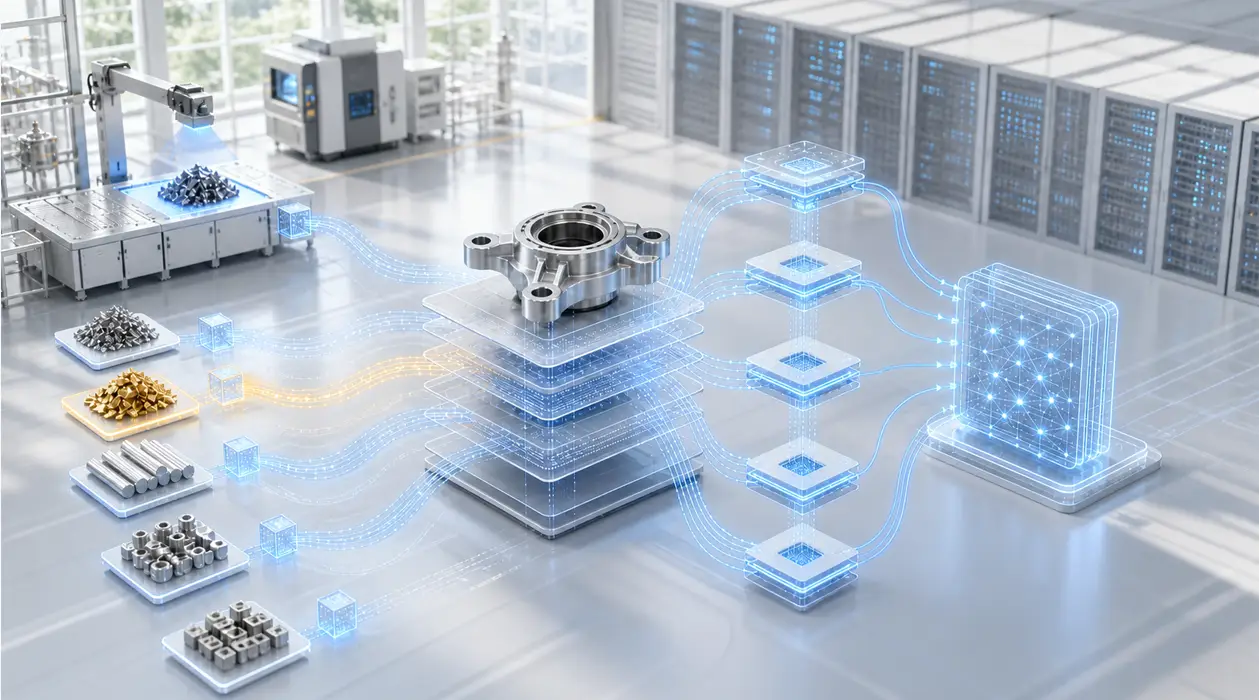
Data collected from the production line (temperature, vibration, production speed, equipment wear) is captured and transferred to the digital twin platform via IoT sensors, industrial protocols (OPC UA, MQTT), and edge computing devices. For example, hydraulic pressure sensors on a stamping press measure the efficiency of each stroke, and this data is transmitted to a cloud-based platform. Vibration data is used to predict bearing wear, while thermal cameras monitor motor temperatures. The Ford brand, for instance, extended equipment life by 25% by combining this data with digital twins. Integrating data into the platform is supported by data lakes and AI models. For example, machine learning algorithms analyze the relationship between production speed and energy consumption to determine the optimal speed. In this process, 5G or industrial Wi-Fi infrastructure plays a critical role in enabling real-time data streaming.
Digital Twins in Real-Time Simulation and Process Optimization
The digital twin platform dynamically optimizes production processes by running simulations in a virtual environment using collected data. For example, when production speed is to be increased in an automotive plant, the digital twin simulates the impact of this change on energy consumption, machine life, and quality. For instance, the Volkswagen brand succeeded in reducing energy costs by 18% using this method. Furthermore, real-time optimization is supported by predictive maintenance: sensor data schedules maintenance by predicting when a bearing will fail. Possibilities—meaning "what-if" scenarios—can also be tested with digital twins. For example, integrating a new vehicle model into the production line is tested virtually, and processes are adjusted without requiring physical changes. Thanks to this, Mercedes-Benz deploys new electric vehicle platforms 50% faster. Recognized for all these contributions and high potential across processes, digital twins transform automotive manufacturing into a flexible, efficient, and future-ready structure, bringing numerous advantages along with these functions.
Advantages Provided by Digital Twin Technology
Digital twin applications serve various advantages. For example, they support predictive maintenance strategies, enabling continuous monitoring of machine performance data and predicting when equipment may require maintenance or repair in light of this data. This predictability is a critically important criterion considering contemporary needs, as it represents a proactive approach. It provides valuable proactive benefits, such as keeping production running uninterrupted and reducing maintenance costs by minimizing unexpected downtime. Through simulations in production processes, it can also be determined which adjustments achieve lower error rates in quality control stages. Thus, while product quality is enhanced, production efficiency is also optimized.
Simulations conducted on virtual models of prototypes reveal design flaws at an early stage, allowing improvements to be made while the product is still in the design process. This represents significant advantages in terms of both time and cost. However, it also brings certain challenges, such as high infrastructure costs and the need for skilled human talent.
The widespread adoption of digital twins requires tackling challenges such as data privacy and a shortage of qualified personnel, in addition to high infrastructure costs. It is important to draw a strategic roadmap for expert support regarding technical integration issues (data security, compliance, infrastructure requirements), planning investment costs that yield returns later, and structuring the organizational adaptation process.
Brand New Horizons That Digital Twin Technology Will Open for the Automotive Industry
According to experts, digital twins have immense potential to transform industries, and are expected to push boundaries further in the future through metaverse integration and real-time AI analytics. Integrating digital twins with the metaverse is expected to continue transforming production processes on a global scale by enabling global teams to collaborate in virtual factories. In the future, alongside metaverse integration, digital twins are anticipated to manage more complex systems and play a critical role in real-time decision-making processes thanks to the low latency of 5G and advanced AI models.
Digital twin technology will carry the automotive sector into the era of "smart manufacturing" through deeper integration with artificial intelligence and machine learning. AI-supported simulations will evolve into self-optimizing systems with real-time data analysis; for example, autonomous digital twins that instantly correct manufacturing errors or dynamically adjust energy consumption will become widespread. Experts find this exciting in terms of product customization. In other words, fully personalized vehicle production is expected to become possible with this technology in the future. As a result, vehicles with instant design modifications made according to customer preferences and tested virtually appear ready to be seamlessly transferred to physical production.
The future of digital twins in the automotive industry heralds new horizons for competitiveness and sustainability. Competitive advantage in the sector will be shaped by companies adopting this technology taking the lead (with up to 40% cost savings, 50% faster product launches, and a 30% lower carbon footprint). This also looks set to create a critical leverage effect in achieving sustainable manufacturing goals. We will talk much more about the overall benefits of digital twins; they will bring operational agility to companies with higher benefits in pre-failure intervention, resource efficiency, and quality improvement.
In short, as digital twins continue to elevate the automotive industry, their specialized impacts—converging around digitalization, innovation, and environmental responsibility—will accelerate both business competitiveness and the transition to a circular economy. This technology will not only affect today's automotive brands, but will also form the foundation of operating principles for tomorrow's automotive giants.