Contents
The B2B commerce world is undergoing profound transformations driven by both technological advancements and changing customer expectations. To stand out in competition and differentiate from rivals, this makes it mandatory to move beyond merely offering products and services. B2B companies must provide an end-to-end seamless digital experience to their business partners and customers. For firms taking orders through channels such as dealer, distributor, and corporate customer portals in B2B, traditional commerce platforms are no longer sufficient. Under these circumstances, Headless B2B Platforms step in. These systems, with their frontend (website, mobile application, kiosk interface) and backend (inventory management, order processing, pricing engines) decoupled from each other, create a competitive advantage by offering flexibility and speed in B2B commerce. We have compiled the topic for you.
What is Headless B2B?
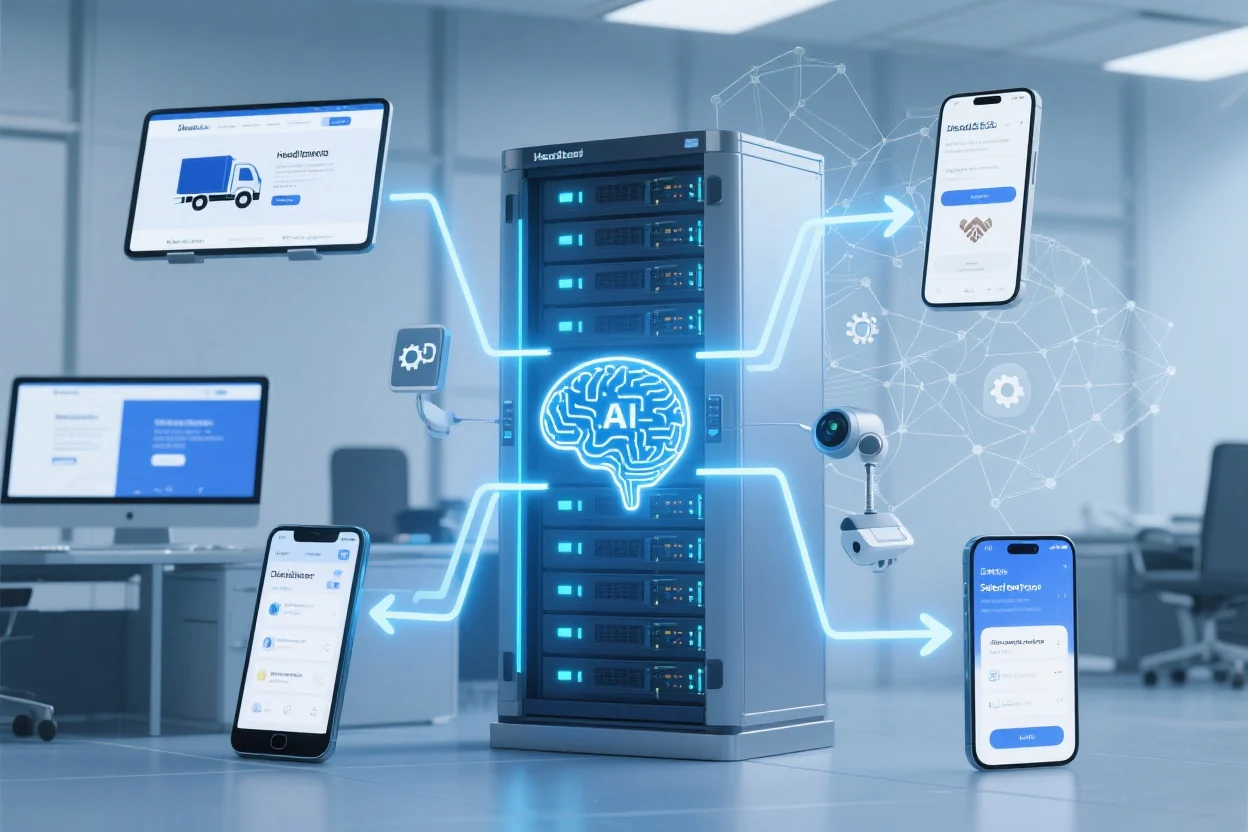
Headless B2B is an architectural approach in enterprise commerce platforms where frontend (customer or dealer interface) and backend (functions such as order processing, inventory management, pricing) systems operate independently of each other. In traditional B2B systems, the frontend and backend are tightly coupled; this causes changes or improvements to affect the entire system, making them slower and more cumbersome. In headless architecture, however, the backend remains a powerful core and provides data to different frontends via APIs. Thus, companies can serve numerous touchpoints—such as websites, mobile applications, dealer portals, sales representative devices, or IoT-based solutions—using the same infrastructure.
Advantages and Disadvantages of Headless B2B
B2B (2B) is inherently complex, and this brings certain requirements. For example: agility, flexibility, scalability, rapid intervention, cost reduction, and efficiency across various dimensions... These are vital for today's world of B2B commerce. On the other hand, the primary advantages of Headless B2B are flexibility and scalability. In this way, companies can design tailored experiences for different geographies, dealer groups, or customer segments much more easily. Adding a new digital channel, updating an existing touchpoint, or offering customized quotes according to the market can be realized much faster and at lower cost compared to traditional architectures. Thanks to the API-first approach, integration with payment systems, ERP solutions, logistics providers, and other third-party services becomes easier. According to research by Gartner, companies transitioning to headless architecture can launch a new channel 40% faster. Furthermore, marketing and commerce teams can produce more creative solutions in frontend development and improve the user experience.
Coming to the benefits and the "dark side" of the matter... Headless B2B can also have challenges, yet it is possible to follow a strategic path to turn these into benefits. First, technical complexity can increase. The technical meaning is this: designing and managing an API-based system properly requires advanced software and integration expertise. A strong engineering team and an accurate project management process are necessary for a successful transition. Initial costs can be high; transforming an existing system or building a headless architecture from scratch represents a significant investment.
Additionally, API-centric structures carry higher cybersecurity risks because the attack surface expands. For this reason, implementing advanced authentication, encryption, and API security protocols becomes mandatory. In other words, transitioning to headless requires not only a technical shift but also an organizational transformation: when team collaboration methods and processes are redesigned, challenges are overcome and deep benefits can be achieved. In the end, those who pursue a "strategically guided, expert-supported" path regarding "what to use and how" emerge victorious.
The Intersection of Headless Architecture and Digital Transformation
In today's commerce, B2B companies gain a competitive edge not only through product quality and price competitiveness, but also through the digital experience they deliver. As traditional B2B platforms began falling short in the face of increasing customization demands, multi-channel sales structures, and rapid integration requirements, organizational needs grew. In particular, customers and dealers expecting the same speed and quality of service across disparate touchpoints steered firms toward more flexible, scalable, and innovative infrastructures. Born out of all these rationales, a concept emerges: Headless Architecture.
The headless architecture approach caught the attention of B2B companies with the freedom it offers, positioning itself as one of the foundational building blocks of next-generation commerce. Regarding its role in B2B: for example, a manufacturing firm can develop country-specific dealer portals, dedicated ordering applications for corporate clients, and mobile solutions for sales reps in the field—all using the same core infrastructure. This means creating diverse experiences from a single backend is entirely possible.
Thanks to its API-based structure, integration with third-party services such as payment systems, inventory solutions, and logistics providers becomes easier; this ensures digital transformation projects advance with greater agility. Specifically, meeting B2B requirements such as adapting to fast-changing market demands and presenting personalized quotes and pricing is achieved more easily with headless architecture.
The Headless Approach in Omnichannel Experiences
In modern B2B commerce, customers and dealers no longer interact at a single touchpoint. Multi-channel has become today's normal. Customers now expect consistent and high-quality service across many diverse channels—such as websites, mobile applications, kiosks, sales representative apps, and even IoT devices. Omnichannel experience is no longer an option; it is a necessity. At this exact junction, the headless approach provides a major advantage to B2B companies. Because frontend and backend are decoupled in headless architecture, each channel can be customized according to its own dynamics, while data and business processes on the backend are controlled centrally. In this way, firms can both present a consistent brand experience and design distinct experiences on each channel tailored to user expectations.
Headless architecture grants companies speed and flexibility while executing omnichannel strategies. Since adding a new channel or updating an existing one does not require rewriting the entire platform, companies can respond much faster to changing market conditions. For example, while a dedicated ordering application is developed for a distributor, an entirely different mobile experience can be designed for another customer segment. Thanks to the API-first approach in headless setups, all these channels operate in harmony with backend order management, inventory, pricing, and campaign systems. This both reduces errors in internal workflows and provides a seamless experience to the customer.
Another major contribution of the headless approach in omnichannel experiences is that it facilitates inter-channel integration. For instance, a customer can initiate an order from a mobile application and complete it on a web portal; or when a sales rep creates an order in the field, this order can be reflected instantaneously in the dealer portal and ERP system. A headless setup enables all these transitions to occur smoothly and in synchronization. Consequently, B2B companies increase not only customer satisfaction but also internal operational efficiency.
Artificial Intelligence and Headless B2B Integration
The nature of headless B2B platforms is flexible and modular. This provides a foundation that makes integration with artificial intelligence solutions exceptionally smooth. While AI applications in traditional "monolithic" systems usually require slow, complex, and costly integration workflows, AI systems can be incorporated into B2B platforms rapidly and compatibly via APIs thanks to headless architecture. This signifies a major transformation in both internal workflows and customer experience. Indeed, substantial gains are achieved in vital areas such as demand forecasting, dynamic pricing, personalized quotation, and automated order management on B2B platforms through AI integrations. According to research published by Gartner at the start of 2024: companies integrating AI into headless B2B systems can reduce order errors by up to 35% and shorten the sales cycle by 25%. This translates into advantages across numerous domains. Adding an AI-supported inventory forecasting engine to the headless infrastructure can significantly mitigate overstock and understock issues. Furthermore, a recent Forrester report indicates that B2B companies implementing headless plus AI integration achieve a speed increase of up to 40% in customer-specific pricing and quotation workflows. Thanks to headless architecture, these systems deliver an omnichannel, uninterrupted experience to customers seamlessly across mobile, web, and dealer portals. The takeaway is this: in today's world, such improvements have become one of the golden keys to creating a competitive advantage in B2B commerce.
The Impact of Headless Architecture on Supply Chain Management
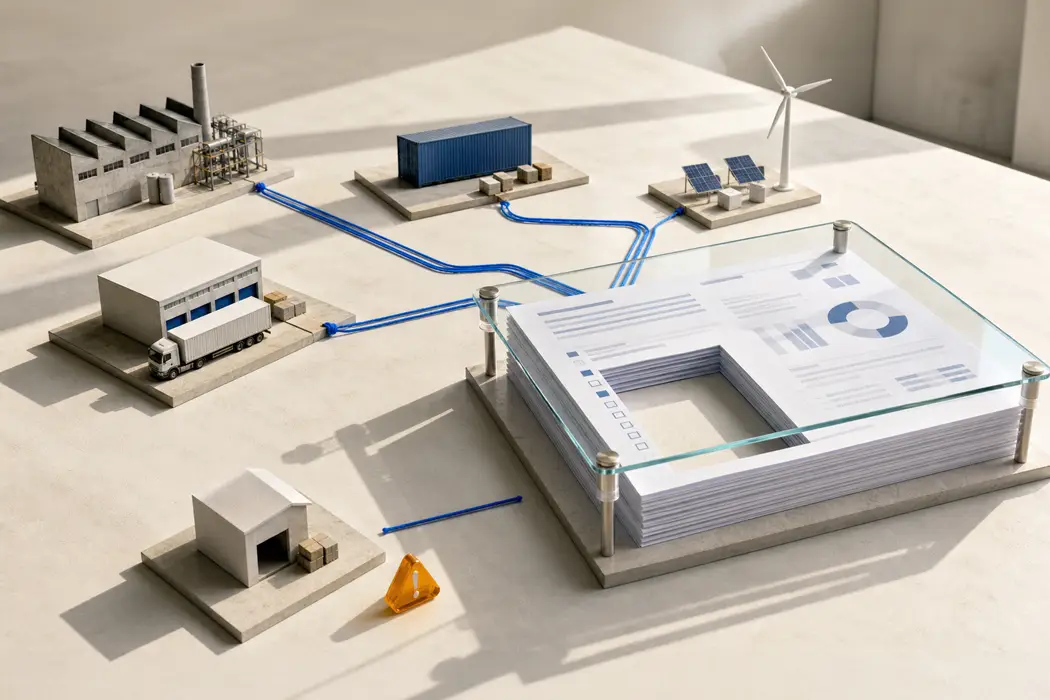
Headless architecture benefits B2B businesses by increasing transparency, speed, and flexibility in supply chain management. By decoupling frontend and backend systems, supply chain processes are managed from a central core, while solutions tailored to different sales channels and business partners can be rapidly developed. Thanks to the headless structure, B2B firms can respond swiftly to fluctuations in the supply chain, execute regional or channel-based strategic shifts more agilely, and ultimately build a more resilient supply chain. This represents a significant competitive advantage. For this reason, an increasing number of B2B companies are adopting this approach to enrich their digital channels and improve customer experience. Through headless architecture, companies achieve efficiency in internal operations and boost customer loyalty while responding faster to shifting market dynamics. Consequently, the integration of artificial intelligence and headless architecture will undoubtedly become even more critical in the future. B2B commerce is no longer merely about taking and shipping orders; it demands advanced digital capabilities such as proactive quote management, risk forecasting, and customer behavior analysis. Headless B2B platforms lay the groundwork for deploying these advanced systems quickly and efficiently, facilitating companies' adaptation to the commerce of the future. Therefore, we will see Headless B2B Platforms emerge as the enterprise commerce infrastructure of the future in terms of both technology and business models. Winners in future B2B commerce will likely be those who utilize the flexibility offered by headless architecture properly.